Camping in Maine is the closest most East Coast travelers get to actual wilderness without flying somewhere. The state has 12 state park campgrounds open to overnight camping, three national park campgrounds on Mount Desert Island, and more private camps than you’ll ever run out of. The range is wide: Acadia’s Blackwoods Campground puts you under spruce canopy 5 miles from Bar Harbor; Baxter State Park lean-tos drop you in genuine wilderness 18 miles from the nearest gas station. This guide covers where to camp across the state, what each area delivers, and how far ahead you need to book to get a site.
Camping in Acadia National Park
Acadia National Park has three maintained campgrounds, all on the NPS reservation system at recreation.gov. All three fill fast, and none of them are the kind of place you can plan last-minute in July.
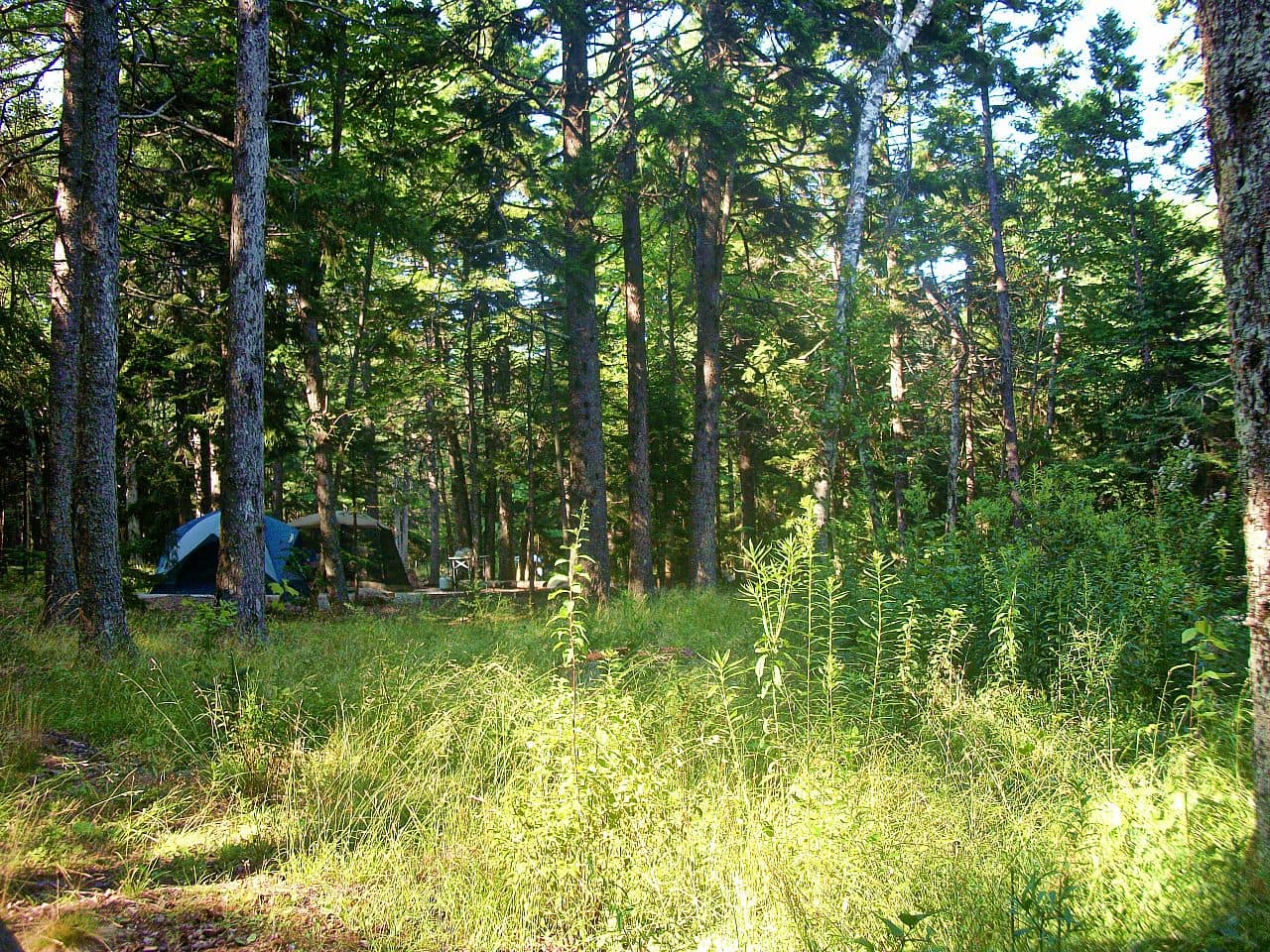
Blackwoods Campground is the main one, off Route 3 on the east side of Mount Desert Island about 5 miles south of Bar Harbor. It has 281 sites for tents and RVs under the spruce and fir canopy, no hookups for most sites, and restricted generator hours. Showers and flush toilets are on site. Blackwoods is the most convenient base for the Park Loop Road, Jordan Pond, and the carriage road network. Book it four to six months ahead for July and August. October Columbus Day weekend books a month or more ahead.
Seawall Campground is on the quieter western side of the island near Southwest Harbor, about 15 miles from Bar Harbor. It has 214 sites and is the closer choice for hiking the western trails, Wonderland, and Ship Harbor. Some sites here are walk-in tent-only. Seawall is generally easier to book than Blackwoods in July, but advance planning still matters.
Schoodic Woods Campground sits on the mainland Schoodic Peninsula, roughly 40 miles east of Bar Harbor by road. It has 94 sites, including some with full electrical hookups, and a paved bike path system connects it to the Schoodic headland and the Schoodic Institute. If you cannot get a Mount Desert Island site, Schoodic is quieter and easier to book in peak season.
Nightly fees at all three run $30 to $35 for standard non-hookup sites, higher for hookups. There is a five-night maximum stay during peak season. Check recreation.gov for exact rates and site-specific details.
Maine State Park Campgrounds
The Maine Bureau of Parks and Lands runs campgrounds at a dozen state parks. Reservations open February 1 each year at maine.gov/dacf/parks, and the most popular parks fill in the first two to three weeks after that window opens. Sites run $25 to $35 per night depending on the park and whether you need hookups.
Sebago Lake State Park, about 35 miles northwest of Portland near Naples, is the state’s busiest campground. Its 250 sites on the north shore of the lake come with a swimming beach and boat launch. This is where southern Maine families book a week in July; it sells out quickly after February 1. Drive time from Portland is 40 to 50 minutes on Route 302.
Camden Hills State Park has 107 sites a mile from downtown Camden. The campground sits at the foot of the hills, and the auto road and hiking trail up Mount Battie both start near the park entrance. For a fall trip, this is a strong base: the Camden Hills typically hit peak foliage between October 10 and 18, and Maine in the fall covers what to expect from a coast fall trip in detail.
Lamoine State Park, about 15 miles east of Ellsworth, is one of the better alternatives when Acadia campgrounds are sold out. It has 62 sites with water views across Frenchman Bay toward Cadillac Mountain, no showers, and a much more relaxed booking situation than anything on Mount Desert Island. The drive to Bar Harbor is about 20 minutes.
Bradbury Mountain State Park in Pownal, 20 miles north of Portland, has 35 wooded sites and a short hike to a hilltop view. It works as a quiet overnight stop for anyone moving up Route 1 between Portland and the MidCoast.
Baxter State Park: Wilderness at the End of the Trail
Baxter State Park is a different category of camping. More than 200,000 acres of wilderness in north-central Maine, no cell service, unpaved access roads, no hookups, and the north terminus of the Appalachian Trail at the summit of Mount Katahdin. The park has 10 campgrounds ranging from the main Katahdin Stream Campground near the mountain to remote backcountry lean-tos reachable only on foot.
Reservations for Katahdin-area sites open in late January through the park’s own reservation system at baxterstateparkauthority.com. They go fast. If hiking Katahdin is the point of your trip, set a reminder for the reservation window the January before you want to go and book on opening day. Day-use parking at the Katahdin trailheads also requires a reservation in season.
The southern campgrounds like Daicey Pond and Kidney Pond are somewhat easier to get into and still put you in genuine North Woods terrain: fishing, canoeing on small ponds, quiet trail loops, and a high probability of seeing moose near the water at dawn. The nearest supplies are in Millinocket, 18 miles from the south gate, so fuel and provision before you go in. Drive time from Portland is about 3.5 hours via I-95 north.
The North Woods: Moosehead Lake and the Western Highlands
The Maine Highlands region and the Moosehead Lake area offer a different kind of camping: remote waterfront, far fewer people, and a higher chance of moose at dusk. The Greenville area has private sporting camps and campgrounds with tent and RV sites, and the state’s public reserved lands in the North Woods allow wilderness camping in many areas.
The western mountains around Rangeley and Bethel have private campgrounds and lakeside sites near Rangeley Lake and Flagstaff Lake. The Appalachian Trail crosses through this region and connects to a series of lean-tos maintained by the Maine Appalachian Trail Club, available on a first-come basis at no charge.
If you are considering the Allagash Wilderness Waterway, plan ahead. It is a seven-to-ten-day paddling route with a vehicle shuttle, genuine wilderness conditions, and a permit requirement from the Maine Bureau of Parks for overnight camping along the waterway. It is one of the more serious camping trips in the Northeast.
Coastal Private Campgrounds Along Route 1
For coast-focused trips, private campgrounds run along and just off Route 1 from the southern beaches up through the MidCoast. Some are full-service RV resorts; others are smaller tent-only loops in the trees.
On Mount Desert Island, Bar Harbor Campground on Route 3 takes both tents and RVs and puts you about 3 miles from downtown without the Blackwoods booking crunch. Oceanside Meadows Campground in Prospect Harbor is a quieter option on the Schoodic side.
On the southern coast, Salty Acres Campground in Kennebunkport and Sea-Vu Campground in Wells are two of the better-run private campgrounds within reach of the beach towns. Both fill in July and August and take online reservations well ahead. The getting around Maine guide covers how Route 1 moves in summer and what the drive times look like once the season kicks in.
When and How to Book
Timing matters more in Maine than in most states:
- Acadia (NPS): Six months ahead at recreation.gov. July and August weekends go within hours of the window opening. Set a calendar reminder.
- Maine state parks: February 1 at maine.gov/dacf/parks. Sebago Lake and Camden Hills fill quickly. If the online system shows no availability, cancellations do open up through the summer.
- Baxter State Park: Late January at baxterstateparkauthority.com for Katahdin-area sites. Set an alarm.
- Private campgrounds: Most take reservations online, some a year out for peak-season holidays.
October Columbus Day weekend at the popular coastal parks is nearly as competitive as August. Midweek sites in early October are much easier to come by and the campgrounds are less crowded.
The best time to visit Maine guide covers the full seasonal picture for all types of trips.
What to Bring and What to Watch For
Maine camping has a few specifics worth knowing before you go.
Temperatures: Even in July, nights on the coast drop into the 50s Fahrenheit. Inland and at elevation they can hit the low 40s. A sleeping bag rated to 40 degrees is the minimum; 30-degree bags give you more room if conditions turn. Coastal fog rolls in overnight and can make everything wetter than expected. A full-coverage rain fly earns its weight.
Black flies: Late May through June is peak black-fly season in inland and northern Maine. In the North Woods during peak weeks they are thick enough to make outdoor evenings miserable without a head net and repellent. The coast is less affected. By early July the worst is over in most of the state.
Moose: If you are camping in the highlands or the western mountains, plan on seeing moose near water at dawn and dusk. Give them space, especially cows with calves. On night drives in the Highlands, watch particularly on Route 11 and Route 6.
Tides and water: The Maine coast has tidal swings of 9 to 14 feet. If you are camping anywhere near shoreline, confirm where the high-water line falls before you pitch your tent. Ocean water stays cold all year and rarely exceeds 65 degrees Fahrenheit at the southern beaches even in August. Inland lakes warm to 70 degrees and above in midsummer and are much more swimmable.