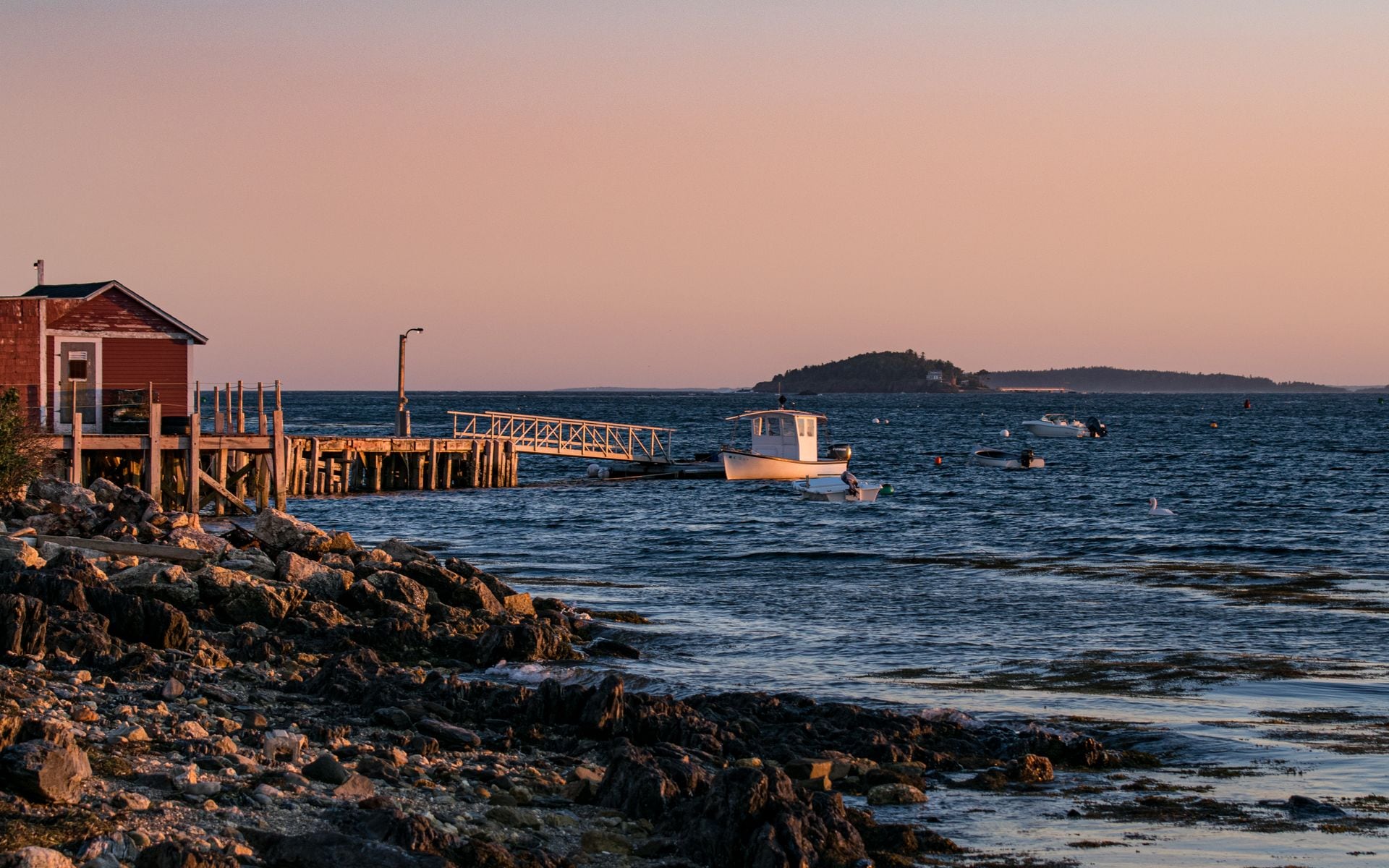
Why Visit MidCoast Maine
The MidCoast runs roughly from Brunswick north of Bath to Belfast on the Penobscot River, and it takes more time to explore properly than most visitors plan for. Route 1 is the spine, but the places worth seeing are mostly down the finger peninsulas that reach south into the Gulf of Maine. Each one has its own fishing village, its own lighthouse at the end, and usually its own ferry connection to an offshore island. Plan at least three days here, and count on Route 1 slowing you down around Wiscasset, where the single-lane bridge over the Sheepscot River backs up badly in July and August.
The MidCoast is windjammer country. The historic schooner fleet has operated from Rockland and Camden since the 1930s, and sailing on a two-masted vessel for two or three days on Penobscot Bay is an experience specific to this part of the coast. It is also where Maine's serious art scene lives: the Farnsworth Art Museum in Rockland holds one of the country's strongest Wyeth collections alongside a broader permanent collection of Maine painters. If you've been to the Maine Travel Guide home page already, you've seen what the state's highlights look like from a distance. The MidCoast is where those highlights get slow and specific.
Top Places in the MidCoast
Camden is the best-known town on this stretch, where the Camden Hills come right down to the harbor and the windjammer fleet ties up between voyages. Mount Battie, at about 1,380 feet, is accessible by trail from the Camden Hills State Park entrance on Route 52 or by a toll road (approximately $6 per car in season) if you want the summit view without the climb. That view takes in the bay, the islands, and the schooner masts in the harbor below.
Boothbay Harbor sits at the end of a 12-mile peninsula off Route 1. The harbor is wide and busy with tour boats, and the footbridge connecting the two sides of the village is a useful landmark for getting oriented. The Coastal Maine Botanical Gardens, on Barters Island Road about 3 miles north of downtown, is worth 2 to 3 hours in summer and fall.
Rockland, roughly 15 miles south of Camden on Route 1, is the ferry hub for Vinalhaven and North Haven and a better base for island trips than Camden itself. The Farnsworth Art Museum on Main Street charges about $20 admission. Rockland's waterfront has also developed a real food scene in recent years. Bath, at the southern end of the MidCoast, is home to the Maine Maritime Museum on the Kennebec River, which tells the story of this coast's shipbuilding history through full-scale vessels, archives, and working demonstrations.
The islands are what most visitors skip because they require planning. Monhegan, 12 miles offshore, has no cars, a serious colony of working painters, and about 17 miles of trails on 700 acres. Vinalhaven and North Haven in Penobscot Bay are working island communities, each with lobster co-ops, rocky shore, and enough to fill a full day from the ferry dock.
Top Things to Do
Windjammer sailing is the activity most particular to this coast. Schooner Appledore II, based in Camden at 18 Bay View St, runs 2- to 3-hour day sails on Penobscot Bay (approximately $40 to $55 per adult, estimated) and has a well-reviewed crew that gets passengers involved in the sailing. For a longer commitment, multi-day windjammer voyages on the classic fleet run approximately $900 to $1,500 per person for 3 to 6 days, departing Rockland and Camden from late May through mid-October. Book several months ahead for July and August dates.
Puffin and whale-watch tours are the other signature option. Cap'n Fish's Cruises operates from 42 Commercial St in Boothbay Harbor with Audubon Society naturalists aboard the puffin trips to Seal Island and Eastern Egg Rock (tours approximately $40 to $55 per adult, estimated). Hardy Boat Cruises, departing from 129 ME-32 in New Harbor on the Pemaquid peninsula, offers a somewhat shorter run to Eastern Egg Rock and is a smart choice if you're already exploring the Pemaquid area. Puffins nest on the outer islands from late May through early August; plan accordingly. For the full Best Lobster Shacks in Maine roundup, the MidCoast has strong entries on every peninsula road.
Hiking the Camden Hills is the main non-water activity in the region. The Maiden Cliff Trail above Megunticook Lake is a 2.4-mile round trip with serious elevation. The Bald Rock Mountain loop on the north side of the park adds about 4 miles and avoids the Mount Battie crowds. Pemaquid Point Lighthouse, at the tip of the Pemaquid peninsula off Route 130, is one of the most-painted lighthouses in Maine and sits above a wave-cut ledge that shows the full force of the Gulf of Maine in any wind from the south.
Where to Stay
The Samoset Resort in Rockport, on Warrenton Street between Camden and Rockland, sits directly on Penobscot Bay with an 18-hole oceanside golf course and a spa. Rates run approximately $300 to $600 per night in summer, and the location gives easy access to both Camden and Rockland without being in the center of either. Rooms with ocean views book out by late spring for peak summer dates.
Camden has the most concentrated inn inventory in the region, with properties along Chestnut Street and Elm Street typically priced between $200 and $450 per night in July and August. Book by March or April if you have specific dates. Boothbay Harbor has a wider range of price points, including motels within walking distance of the Commercial Street pier where the cruise boats dock. Rockland has become a more practical base in recent years as its food scene has grown. For a full breakdown by region, see Where to Stay in Maine.
Getting There and Around
Portland International Jetport (PWM) is the most practical gateway, about 1.5 hours south of Camden via I-95 north to Route 1. Bangor International Airport (BGR) puts you about an hour north of Camden and works well if you plan to split time between the MidCoast and the Highlands. A rental car is required for everything in the MidCoast; the towns are connected by Route 1, but the peninsulas require their own detours.
Route 1 is the only continuous road through this part of Maine, and it is two lanes for most of its length. Between Wiscasset and the Boothbay turnoff, summer traffic can add 30 to 45 minutes to what looks like a 10-minute stretch on a map. Leave early in the morning or after 6 p.m. to avoid the worst of it. For the islands, the Maine State Ferry Service from Rockland to Vinalhaven and North Haven runs multiple times daily in summer (approximately $17 to $20 round trip per adult, estimated). Hardy Boat Cruises to Monhegan departs New Harbor with crossing times around 75 to 90 minutes each way.
Best Time to Visit
Late June through Labor Day in early September is the main window. The windjammer fleet runs, the puffins are on the outer islands, the ferry schedules to Vinalhaven and Monhegan are at their fullest, and every lobster pound and restaurant is open. Expect peak prices and Route 1 congestion to match.
September and early October are often the preference of people who have been here before. Crowds thin after Labor Day, room rates drop 20 to 40 percent at most inns, and the Camden Hills begin to turn color in late September. The windjammer fleet runs through mid-October, the Farnsworth Museum stays open year-round, and the Maine State Ferry continues daily service to the Fox Islands through the fall. Pemaquid Point is worth visiting in shoulder season specifically because the parking lot isn't full and the ledges are less crowded.
Frequently asked questions
How do I get to Monhegan Island from the MidCoast?
Hardy Boat Cruises departs from New Harbor on the Pemaquid peninsula (ME-32), with a crossing time of roughly 75 to 90 minutes each way. The Monhegan Boat Line runs from Port Clyde, at the end of the St. George peninsula south of Rockland, with similar crossing times. Day trips are possible but give you only about 4 to 5 hours on the island depending on the ferry schedule; if you want more time, there are a handful of small inns that book up well in advance, as there are fewer than 20 guest rooms on the island total.
Are multi-day windjammer trips worth it, and how do I book one?
They are the experience most specific to Maine's MidCoast and unlike anything else on the East Coast. Most voyages run 3 to 6 days and cost approximately $900 to $1,500 per person including all meals, with itineraries that depend on wind and weather rather than a fixed schedule. The Maine Windjammer Association website lists the full fleet, which includes about a dozen vessels based in Rockland and Camden. No sailing experience is required. The main thing to know going in: cabins on historic schooners are small and most share bathroom facilities. Book directly with the vessel you want, and plan at least 4 to 6 months ahead for July and August.
Is Rockland or Camden a better base for exploring the MidCoast?
It depends on your priorities. Camden has more inns, a more photogenic harbor, and the Camden Hills directly behind town, which makes it the obvious choice for first-timers. Rockland is the practical choice if you plan to take the ferry to Vinalhaven or North Haven, want to visit the Farnsworth Art Museum, or prefer a working-harbor town with fewer boutique shops. The two are about 15 miles apart on Route 1, which takes around 20 to 25 minutes in shoulder season and up to 40 minutes in peak summer traffic.
When are puffins visible from the tour boats?
Atlantic puffins nest on the outer islands of the Gulf of Maine from late May through early August, with peak numbers on Eastern Egg Rock and Seal Island in June and July. Cap'n Fish's Cruises from Boothbay Harbor and Hardy Boat Cruises from New Harbor both run Audubon-naturalist-staffed puffin tours during this window. After mid-August, puffin numbers drop sharply as the birds return to open ocean, and the tour operators typically shift to fall wildlife or foliage cruises.