What to Expect
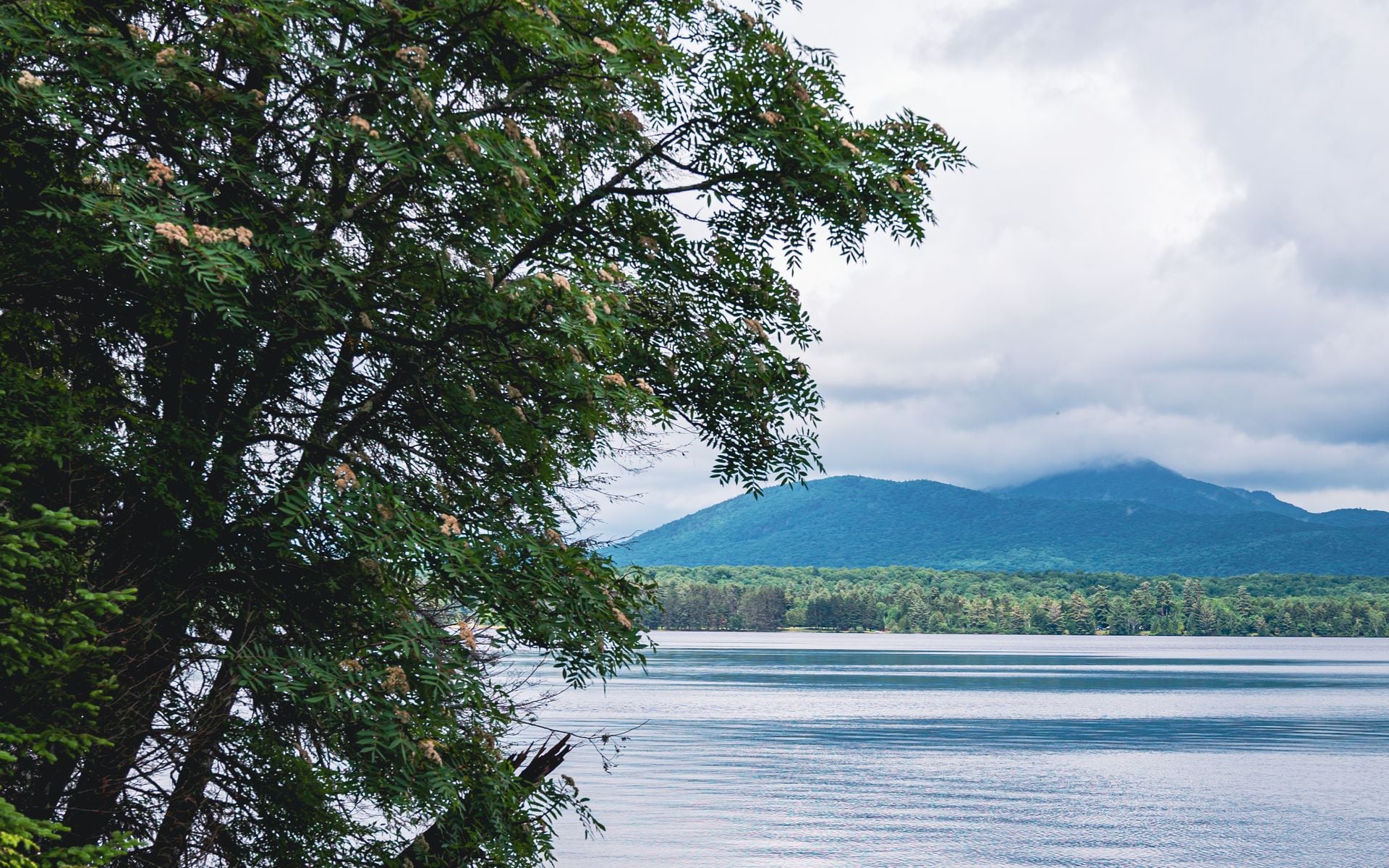
Moosehead is not a resort lake. The town of Greenville, at the southern tip of the water, has a handful of restaurants, a general store, and an outfitter or two, but the surrounding landscape is working Maine forest: dense spruce and fir running down to the shoreline, log trucks on the two-lane roads, and a moose population large enough that wildlife sightings are routine rather than lucky. Mount Kineo, a 763-foot monadnock of volcanic rhyolite, rises straight off the water about 3 miles from the hamlet of Rockwood, roughly 20 miles north of Greenville on Route 15. It is one of the more dramatic natural features in the state and has no road access. Cell service drops out quickly once you leave Greenville's center, and the roads heading north toward Kokadjo or west past Rockwood toward Seboomook are unpaved in stretches.
The lake runs 35 miles north to south and reaches up to 18 miles wide. That's enough open water to generate serious afternoon chop and fast-moving weather, so check conditions before heading out in a small boat. Moosehead sits within The Maine Highlands, Maine's vast interior region, and the scale of the surrounding forest becomes clear quickly once you're on the water or in the air above it. Plan to spend at least 2-3 nights to do the area justice.
What to Do There
Moose watching is the headliner, and the area earns its reputation. The wetlands along the road between Greenville and Kokadjo and the logging roads around First and Second Roach Ponds are the most reliable corridors, particularly at dusk and dawn. The two best windows are late May through mid-June, when cows with calves frequent the boggy shallows, and September through October during the rut, when bulls are easier to spot in the open. Local outfitters run guided moose-safari trips by canoe and by vehicle, typically departing at dusk, for roughly $60-120 per person (estimated rates; book directly with local operators for current pricing).
Mount Kineo is worth the effort to reach. The only access is by boat, and a seasonal passenger ferry crosses from Rockwood from roughly July 4 through Labor Day for around $10-15 round trip. Once on the peninsula, the Indian Trail climbs to the 763-foot summit in under 2 miles one way, with some steep scrambling through spruce and hardwood near the top. Views from the summit take in the full length of the lake and the ridgelines of the North Woods in every direction.
Floatplanes are part of what makes this area distinct from every other Maine lake. Greenville has functioned as a seaplane base since the 1920s, and scenic flights over the lake and surrounding forest run roughly $150-250 per person for 30-45-minute tours (estimated). From the air you understand why Maine's interior is called the Big Woods: miles of unbroken forest, hundreds of ponds, and almost no roads.
Fishing on Moosehead and its connected waters draws serious anglers year-round. The lake holds landlocked salmon, brook trout, lake trout (locally called togue), and smallmouth bass. The West Outlet of the Kennebec River, which drains from the southern end of the lake, is a well-regarded fly-fishing stretch with good salmon runs in spring and fall. Ice fishing is a genuine draw from February through March, when the lake surface freezes to several feet thick and fish houses appear in organized communities on the ice. A Maine nonresident fishing license runs approximately $26 for 3 days or $64 for the full season (estimated; check Maine.gov for current rates). For a full guide to fishing in the state, see our Fishing and Charters page.
Lily Bay State Park sits on the eastern shore about 9 miles north of Greenville and is the most organized base camp for the lake. It has over 90 sites with both waterfront and wooded options, a boat launch, and a sand beach for swimming, with nonresident sites running roughly $25-35 per night during peak season (estimated). The park fills weeks out in July and August, so reserve through Maine's online reservation system well in advance.
If you're combining Moosehead with a summit day on Katahdin, plan a full separate day. Baxter State Park is about 1.5-2 hours from Greenville by way of Millinocket on Route 11 south, then east on the Baxter State Park Road. Katahdin trailhead parking requires a day-use reservation in season, and there are no services inside the park gates.
Getting There and Access
Bangor International Airport (BGR) is the practical arrival point, about 70 miles south of Greenville and roughly 1.5-1.75 hours north on Route 6/15 through Dover-Foxcroft. Portland International Jetport (PWM) is 4.5-5 hours south, making it a viable arrival but a long first-day drive. There is no public transit to Greenville, no bus service, and no way to see this part of Maine without a rental car. Fill the tank in Greenville before going in any direction; options disappear quickly once you head north toward Kokadjo or west past Rockwood.
Visitors who want a structured introduction to the North Woods before self-directing deeper into the interior can look at SK Tours Of Maine, LLC, a 5-star-rated tour operator based in Bangor that runs guided trips into Maine's backcountry. If you'd rather break the drive with a comfortable first night before heading up Route 6, the Residence Inn by Marriott Bangor (rated 4.7, with complimentary breakfast and a pool) is the most consistent well-reviewed option in Bangor. From there, Greenville is 90 minutes north.
On the drive out, most visitors route back through Bangor and then south along the coast. That trip pairs well with a lobster stop; our Best Lobster Shacks in Maine guide covers the coast from Kittery to Trenton, and several top picks are right on the Bangor-to-Portland corridor on Route 1.
Best Time to Go
Late May and June offer the most reliable moose viewing, with cows and calves in the wetlands along the Greenville-to-Kokadjo road and around the Roach Ponds. The tradeoff is black flies, which are serious through mid-June and can make extended outdoor time miserable without head nets and DEET. Most visitors who come in late May are anglers and moose-watchers who know what they're signing up for.
July and August are the most comfortable months for general visits: daytime highs in the low-to-mid 70s, nights in the 50s, reliable weather for boating, and full access to Lily Bay and the Kineo ferry. These are also the busiest months, and campsites book weeks out. September is the sweet spot for a lot of visitors: black flies are gone, moose activity picks up again during the rut, and foliage color begins showing on the hardwood ridgelines above Greenville by late in the month. October extends the foliage window to roughly mid-month but brings cooler temperatures and the start of seasonal closures, including the Kineo ferry after Labor Day. Winter runs December through March, with snowmobiling on the ITS trail network and ice fishing the main draws.
Good to Know
Download offline maps before leaving Greenville. Google Maps will lose cell signal quickly on the logging roads heading north, and there are stretches west of Rockwood where navigation apps are useless entirely. Bears are present throughout the area; use hard-sided food containers at all campsites and keep food out of vehicles overnight. Weather on the lake changes fast, particularly in the afternoon: calm mornings can turn to whitecap conditions within an hour. Check the marine forecast before taking a small boat out.
Lodging in Greenville and Rockwood is limited and books out well in advance for peak summer weekends and the fall foliage corridor. If you're coming for a major holiday weekend in July or August, plan your accommodations months out, not weeks. Services north of Greenville are essentially nonexistent, so grocery shop and fill prescriptions before you drive up.
Frequently asked questions
Is Moosehead Lake worth the long drive from Portland or Boston?
If you're coming for the North Woods experience, moose, backcountry fishing, or floatplane rides, yes. It's 4.5-5 hours from Portland and roughly 6.5 hours from Boston, so it works better as a 3-plus-day trip than a weekend run. Pairing it with Baxter State Park and a night in Millinocket makes a strong week-long interior itinerary.
When is the best time to see moose near Moosehead Lake?
Late May through mid-June is the most consistent window, when cows with calves frequent wetlands along the Kokadjo road and around the Roach Ponds. September and October during the rut are almost as good and come without the black flies. Plan to be out at dusk or just after dawn, not midday.
What town do you stay in when visiting Moosehead Lake?
Greenville, at the southern tip of the lake, is the main service town and has the largest concentration of lodging, restaurants, and outfitters. Rockwood, about 20 miles north on Route 15, is a smaller alternative and puts you closer to Mount Kineo. Most visitors base in Greenville and day-trip north.
Can you swim in Moosehead Lake?
Yes. Lily Bay State Park on the eastern shore has a sand beach and is the most organized spot. The water is cold even in peak summer, typically reaching 65-70°F at the surface by mid-July, so it's not the easy wade-in of a southern Maine beach. That said, it's swimmable and the beach is pleasant on a warm afternoon.
Do you need a reservation to camp at Lily Bay State Park?
Yes, reservations are strongly recommended for July and August, when the park fills weeks out. Book through the Maine state park reservation system (maine.gov/dacf/parks) well in advance for summer and fall foliage weekends. Rates for nonresidents run roughly $25-35 per night depending on site type (estimated; check the site for current rates).