Portland in January looks nothing like Portland in July. The summer visitors are gone, the Old Port parking lots have space, and the line at Eventide on a Friday night is a fraction of what it was in August. The food scene runs year-round, the ferry to Peaks Island operates on a winter schedule, and hotel rates drop noticeably below summer levels. If your priority is eating and drinking well in a Maine city without the summer premium, Portland in winter is worth a serious look.
What Portland Feels Like in Winter
December afternoons on the coast reach around 32 to 40 degrees Fahrenheit, with overnight lows falling into the high teens and low 20s. January and February bring the coldest stretch, with daytime highs typically running 28 to 36 degrees and overnight lows that can drop to single digits during cold snaps. Snow accumulates: Portland averages around 60 inches per season, distributed across multiple storms rather than one continuous layer. Streets in the Old Port and downtown clear quickly after snowfall. The sidewalks on the cobblestones around Exchange Street can ice over, so footwear with real grip matters.
Daylight is short. By mid-December, sunset arrives before 4 p.m. in Portland. By late February, you’re back to about 5:30 p.m. That compresses your outdoor hours, particularly if you want to walk Fort Williams Park in Cape Elizabeth or photograph the working waterfront in good light. Plan outdoor activity for the middle of the day and fill the early evening with food and indoor draws.
What winter gives you is the city without its summer personality. The Old Port on a Tuesday in January has maybe a dozen people on Exchange Street. The restaurants are running, the brew pubs fill up by 7 p.m. on a Friday, and you can walk the cobblestones without navigating around tour groups. For travelers who find the July version of Portland uncomfortably crowded, January and February read as a completely different experience.
The Holiday Season in December
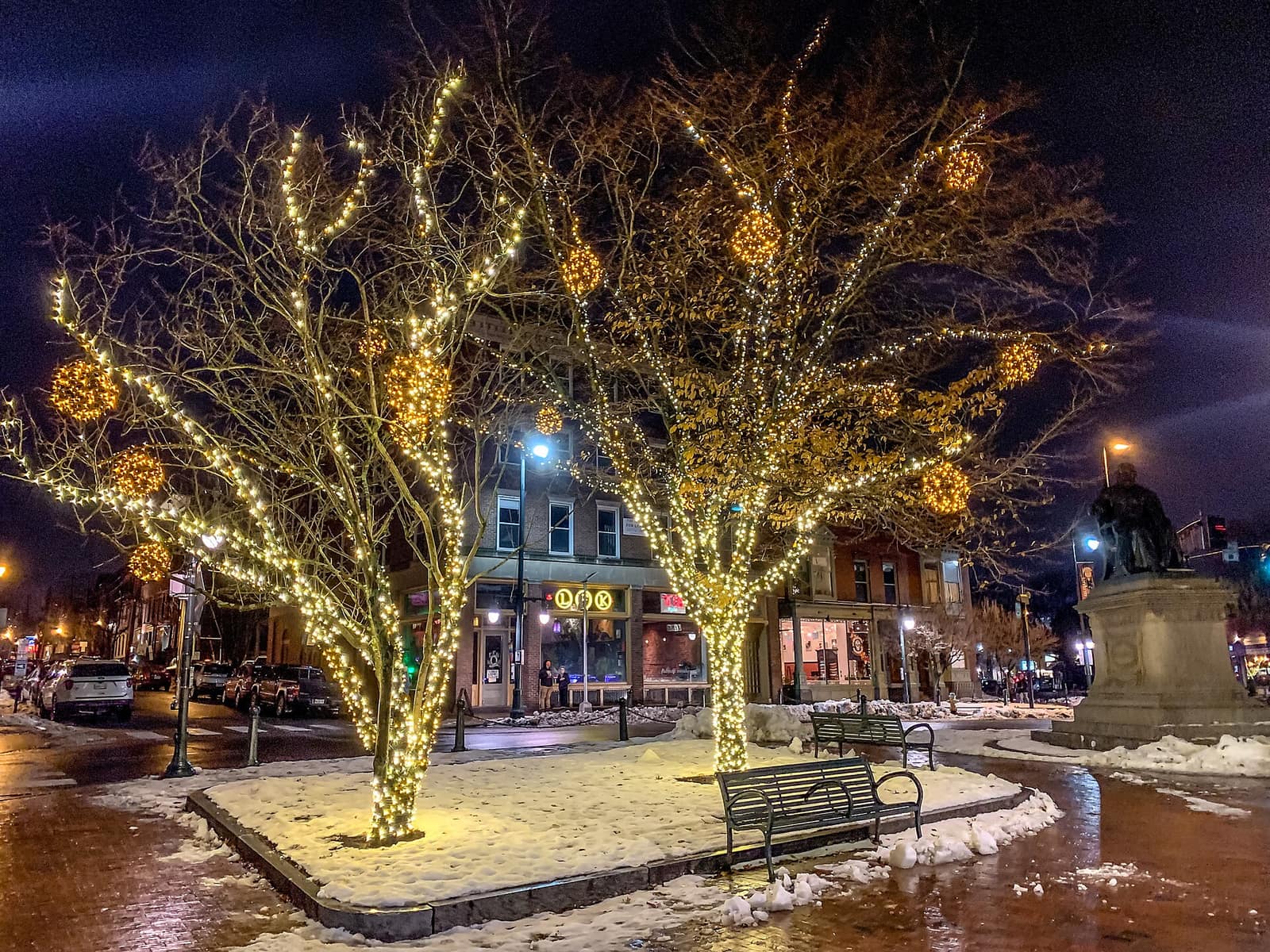
December is the most visually complete winter month in Portland. Longfellow Square on Congress Street goes up with lights, and the surrounding Arts District corridor gets holiday decorations from the galleries, bookshops, and independent shops along the way. The Old Port fills with local shoppers in the weeks before Christmas rather than tourists, which changes the energy considerably from summer.
The Wadsworth-Longfellow House at 489 Congress Street, operated by the Maine Historical Society, has winter hours and runs exhibits through the cold months. It’s one of the oldest wood-frame houses on the Maine coast and covers the Longfellow family’s connection to Portland across three generations. The Maine Historical Society next door has research access and rotating exhibits that draw a local rather than tourist crowd, which makes the visit feel more like something actual Portlanders do.
Freeport, about 17 miles north on I-295, is open and worth a half-day in December. The L.L.Bean flagship is open 24 hours a day, every day of the year, including holidays. The 105,000-square-foot main store runs full inventory in winter, and the surrounding outlet shops stay busy through the holiday shopping season. The drive from Portland runs about 20 minutes in light traffic.
What’s Open: Restaurants, Brew Pubs, and the Waterfront
Portland’s food scene doesn’t go seasonal. Eventide Oyster Co. on Middle Street is open year-round, and so are most of the restaurants that built Portland’s dining reputation. Becky’s Diner at 390 Commercial Street opens before dawn and serves a full diner breakfast, drawing a mix of dock workers and regulars that shifts to a different crowd than the summer lineup. Duckfat on Middle Street runs its Belgian fry menu year-round. For the full restaurant breakdown, the Portland city guide covers specifics. In winter, the practical difference is that you can usually get into restaurants that fill up completely in July without planning weeks ahead.
The brewery scene holds through winter without much change. Allagash Brewing Company runs tours and a taproom at its Portland facility year-round. Bissell Brothers Brewing at Thompson’s Point has a taproom that draws a consistent local crowd. A cluster of other taprooms runs along the Congress Street and High Street corridor in the Arts District, all indoors and a reasonable way to spend an afternoon when a storm moves in.
Casco Bay Lines ferries to Peaks Island and the other bay islands operate on a reduced winter schedule, but the service does not stop. Round-trip tickets typically run $8 to $11 per adult, and the ferry functions as public transit as much as a scenic trip. Peaks Island in winter is quiet, with fewer than half its seasonal services open, but the crossing itself and the harbor views from the boat hold up in any season. Bring extra layers: the open water on Casco Bay in January is cold and the wind accelerates once you leave the harbor. The Portland place guide covers ferry routes and waterfront logistics in more detail.
The Portland Museum of Art and Indoor Draws
The Portland Museum of Art at 7 Congress Square is the anchor indoor option for a winter day. The Charles Follen McKim building holds the museum’s permanent collection, with its American art holdings the main reason to visit. The Winslow Homer collection here is the most complete in existence, covering his work from the 1880s and 1890s when he worked out of Prouts Neck, about 10 miles south of Portland. Homer painted the Maine coast across every season, including winter storms, and those paintings make a different kind of sense when you’re looking at them in January than in any other month. Admission runs around $20 for adults; the museum has historically offered free Friday evenings during certain periods, so check the current schedule at portlandmuseum.org before you go.
Portland has a year-round live-event calendar. The State Theatre on Congress Street and Merrill Auditorium book shows through winter, with touring acts that would skip a smaller city filling those venues from November through March. For a weekend of eating, a museum visit, and a show, you don’t need a car once you’re parked, which makes the logistics easier than a summer trip where you’re moving between more spread-out destinations.
Getting to Portland in Winter
Portland International Jetport (PWM) runs year-round service with nonstop connections from Boston, New York, Philadelphia, Washington, Chicago, and a growing set of other markets. Winter fares, particularly in January and February, typically come down from summer levels. Roundtrip flights from Northeast cities in January often land in the $150 to $280 range (estimate), compared to $200 to $450 in summer. The airport is about 10 minutes from the Old Port by rideshare.
Amtrak’s Downeaster runs from Boston’s North Station to Portland’s Thompson’s Point station multiple times daily, year-round. The trip takes about 2.5 hours and fares start around $25 to $35 each way. In winter, the train is often a better option than driving: I-95 through Massachusetts and New Hampshire can slow significantly during heavy snowstorms while the Downeaster keeps running on a modified schedule. Weekend trains to Portland fill up in December, so book ahead if you’re traveling around the holidays.
If you’re driving, I-95 and the Maine Turnpike are treated and cleared quickly after storms. The stretch from Boston to Portland runs about two hours in clear conditions. Build in extra time after a snowstorm: the Scarborough interchange sees congestion once the roads reopen and traffic catches up. For a broader picture of driving and transit options around the state, the getting around Maine guide has the logistics. Whether you need a car in Maine depends on your itinerary: within Portland, you don’t; reaching Portland Head Light or Freeport without one is harder.
Where to Stay and What It Costs
Portland has the widest range of lodging in Maine, which helps in winter because it includes chain hotels alongside independent inns. A downtown mid-range hotel in January or February typically runs $110 to $190 per night (estimate), compared to $250 to $380 in peak summer. Portland’s independent inns are mostly open through winter, though a handful of the smaller seasonal B&Bs close from November through April. Call ahead if you’re booking a smaller property in late January or early February.
For the full season-by-season cost breakdown, the Maine trip cost and budget guide covers lodging by region and travel style. On the question of when lodging prices bottom out across Maine, the best time to visit Maine covers the seasonal trade-offs in detail. Portland’s winter rates are generally the lowest of any coastal town in the state because the city has genuine year-round demand and a broader inventory than Bar Harbor or Camden.
When to Go
December is the most atmospheric month. The holiday lights are up, the restaurants are all open, and the days are short but the city feels occupied in a way that pure January doesn’t. January is the quietest month and typically the cheapest, which makes it the best choice if your main goal is the food and brewery scene without crowds. February has slightly longer days and the tail end of ski season if you’re combining Portland with a drive up to Sunday River or Sugarloaf. March can still be cold and snowy on the coast, but the days are noticeably longer and the transition out of winter starts.
For a weekend trip from the Northeast, Portland in winter is one of the more practical Maine destinations: the airport connects to major markets year-round, the Amtrak option works from Boston, and the city itself stays fully open. The coast is dramatic in winter in a different way than summer, and the harbor views, the lighthouse at Cape Elizabeth, and a long dinner in the Old Port add up to a trip that costs considerably less than the same itinerary in July.
Frequently asked questions
Is Portland, Maine worth visiting in winter?
For the right traveler, yes. The restaurant and brewery scene is fully operational, hotel rates come down significantly from summer peaks, and the city is easy to navigate without summer crowds. The trade-off is short days (dark before 4:30 p.m. in December), cold temperatures that can drop below zero during cold snaps, and snow that requires real boots and an extra layer. Travelers who want a working port city with serious food and minimal tourist traffic will find Portland in January a good fit.
Does Portland, Maine get a lot of snow in winter?
Portland averages around 60 inches of snow per season, spread across multiple storms rather than a single sustained snowpack. The city clears roads quickly, and major streets and the Old Port sidewalks are treated after each storm. December and February tend to see the most storm activity. Coastal weather can change fast, and a forecast that looks clear on Monday can produce six inches by Wednesday. If your trip involves outdoor activity, check conditions a few days out and keep plans flexible.
What is Portland, Maine like in January?
January is the quietest month of the year. Foot traffic on Exchange Street is light, restaurants are open but not full, and parking in the Old Port is easy to find. Hotel rates are at their winter low. The Casco Bay ferries run on a reduced schedule but do operate. The Portland Museum of Art is open, and the city’s live-music venues book shows through the winter. Cold temperatures and short days require planning your outdoor time around midday light, but the core of what makes Portland worth visiting works in January the same as in any other season.
How cold does Portland, Maine get in winter?
January is typically the coldest month, with average daytime highs around 30 to 35 degrees Fahrenheit and overnight lows that can reach the single digits during cold fronts. December and February are slightly warmer on average. The coast is marginally milder than inland Maine: the ocean moderates temperatures, so Portland rarely stays as cold for as long as the Highlands or the western mountains. Wind off Casco Bay makes the waterfront feel colder than the temperature suggests. A wool or synthetic mid-layer and a waterproof outer shell cover most winter days without much adjustment.