What to Expect
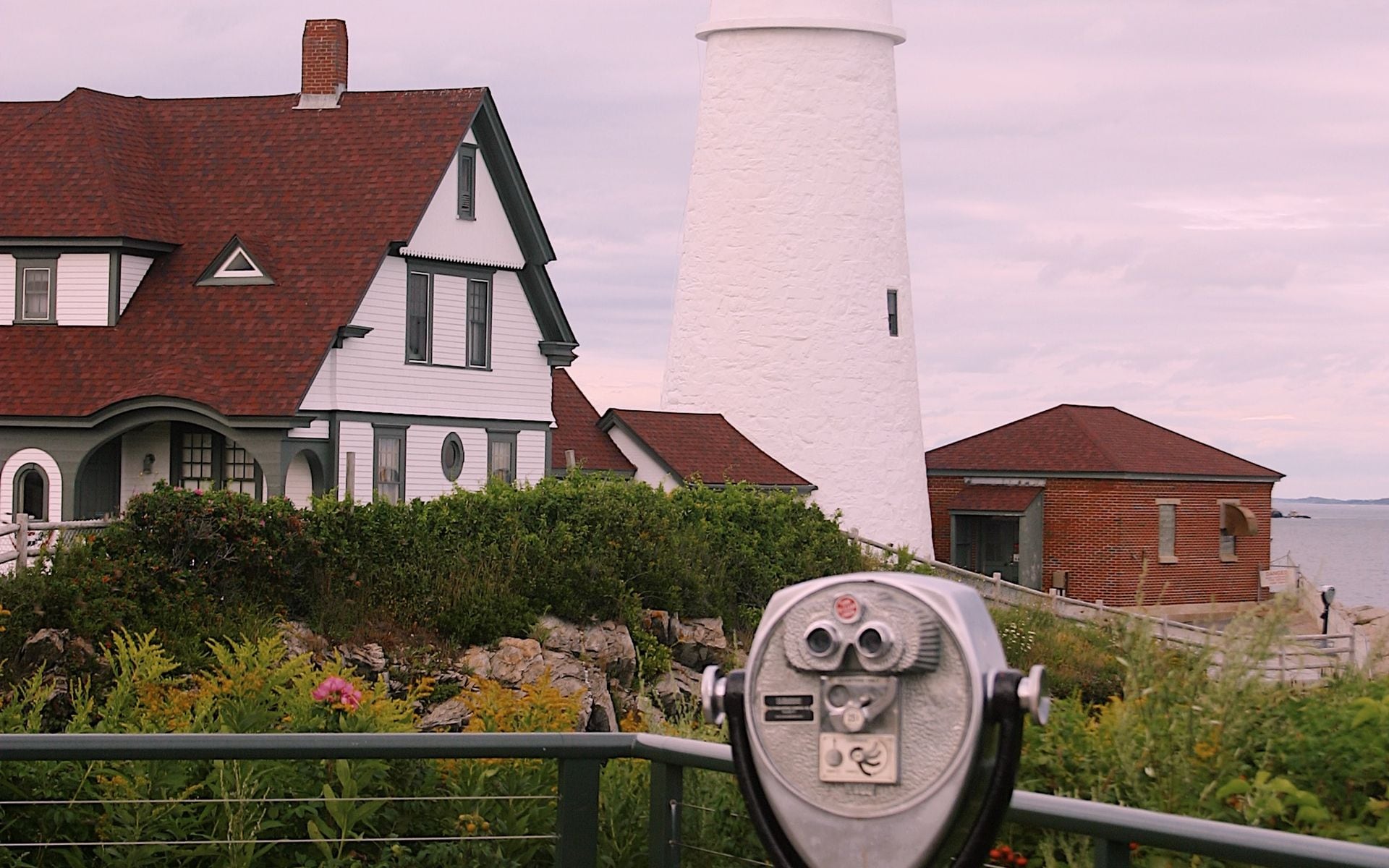
Portland Head Light sits on a rocky headland at Fort Williams Park in Cape Elizabeth, a town park covering about 94 acres of open lawn, coastal paths, and the concrete remains of a coastal artillery battery used through World War II. The lighthouse itself is an active US Coast Guard aid to navigation, with a tower that rises 101 feet above sea level. President George Washington commissioned it, and it flashed for the first time on January 10, 1791. That makes it not just the oldest lighthouse in Maine but one of the oldest in the country.
From the park, you look out over the open Atlantic and the entrance to Casco Bay. The ledges directly below the tower are pink-gray granite, flat enough to walk on in most conditions, and the surf runs in and breaks white against them even on calm days. On a clear afternoon in July, you can see the Casco Bay islands offshore and, when the air is sharp enough in September, the hills of the MidCoast in the distance. It photographs extremely well from the south side of the tower, which is why it shows up on more Maine postcards than any other lighthouse in the state.
The site fits naturally into a day organized around the broader Greater Portland and Casco Bay region. Portland's Old Port is 15 to 20 minutes north by car. Fort Williams Park is free to enter, parking is free, and the grounds are open year-round from dawn to dusk.
What to Do There
Walking the grounds and the ledge path takes 30 to 45 minutes at an easy pace. The best photography angle is from the south side of the tower, where you can position yourself on the lower rocks with the keeper's quarters and tower filling the frame above the surf line. Late afternoon puts the sun behind a south-facing lens, which is why photographers tend to time their visits accordingly. On summer weekends, arrive before 10 a.m. if you want clear access to the lower ledges before the crowds settle in.
The Museum at Portland Head Light occupies the attached former keeper's quarters, which is a significant detail: you are standing in the actual rooms where the lighthouse keepers and their families lived, not in a purpose-built exhibit hall. The museum traces the full history of the light, from its construction through more than two centuries of operation, and documents the shipwrecks it could not always prevent. The best-documented of those is the Annie C. Maguire, a three-masted ship that ran aground directly at the base of the lighthouse on Christmas Eve 1886. The keeper and his family helped rescue the entire crew. Museum admission runs roughly $5 to $8 for adults (estimated), with children 5 and under typically free. Hours operate on a seasonal schedule, generally late May through Columbus Day weekend.
The gun emplacements left from the park's military past are scattered across the grounds and are worth a look. The gun battery was part of the coastal defense network during both World Wars, and the concrete structures are substantial enough to explore on foot. Kids who lose interest in the lighthouse tend to find the tunnels and casements interesting.
Two Lights State Park is about 2 miles farther along Shore Road in Cape Elizabeth and pairs well with Portland Head Light as a longer morning on the southern coast. Two Lights has a different angle on the ocean, more walking paths through coastal scrub, and a picnic area. Neither site takes more than an hour, so the two together fill a solid half-day without rushing.
After the lighthouse, the dining options in Portland are 15 to 20 minutes north. Becky's Diner on Commercial Street opens at 4 a.m. on weekdays and is the move if you want to eat before the lighthouse crowds arrive. For lobster in the Old Port, The Highroller Lobster Co. on Exchange Street does fresh, well-stuffed rolls in a quick-service format, and DiMillo's On the Water at 25 Long Wharf is a full-service restaurant on a converted fishing pier with harbor views and a large Maine seafood menu. Duckfat on Middle Street, known for its duck-fat fries and poutine, draws a line at lunch but moves it reasonably fast. From Portland, Freeport is about 30 minutes north on I-295 if you want to extend the day up the coast.
Getting There and Access
The park address is 1000 Shore Road, Cape Elizabeth, ME 04107. From downtown Portland, cross the Casco Bay Bridge into South Portland, then follow Broadway south and pick up Shore Road through Cape Elizabeth. The drive is 4 miles and takes 15 to 20 minutes without traffic. On summer weekend mornings, budget 25 minutes. GPS handles the route without issues.
There is no public transportation to Fort Williams Park. A car is required. Portland International Jetport (PWM) is the nearest commercial airport, about 20 minutes from the lighthouse by car, with nonstop service on the major US carriers. If you fly into Boston Logan (BOS), the drive up to Cape Elizabeth runs roughly 90 minutes without summer traffic on I-95 and the Maine Turnpike.
Parking in Fort Williams Park is free, but the lot is not large. On busy summer weekend days it can fill by mid-morning. When the lot is full, Cottage Road back toward Cape Elizabeth center has limited street parking, and some visitors park near the town center and walk in. The path from the lot to the lighthouse and ledges is paved and accessible.
Best Time to Go
Late June through August is the main visitor window. Days are long, the museum is fully staffed, and the ledges are at their most accessible. The trade-off is the crowds: summer weekends pack the lot and the lower rocks by midday, and the park can feel more like a busy scenic pull-off than a quiet coastal stretch. Weekday mornings in July and August give you the same conditions with significantly less company.
September and early October are worth considering. Crowds drop sharply after Labor Day, the light quality improves as the sun moves lower in the sky, and the maples inside Fort Williams Park start to turn by early October. The museum stays open through Columbus Day weekend. The ocean temperature drops but the weather on the headland in September is often the best of the year: clear, cool, and steady.
Winter is possible but commit to dressing for real cold. The park stays open year-round, and the surf in January and February against the granite ledges is dramatic in a way that summer never is. The museum is closed, the lower ledges can be icy, and the wind off Casco Bay is serious. Spring, particularly April and early May, brings fog and cold; the park wakes up steadily through May as the museum reopens and the crowds come back.
For planning a broader lighthouse trip along the Maine coast, the Lighthouses activity page covers the full range of options, and the Best Lighthouses in Maine guide ranks the most rewarding individual stops from the southern coast up through Downeast.
Good to Know
The lighthouse tower is not open to visitors. It is an active aid to navigation, and the US Coast Guard controls the interior. You can walk directly to the base of the tower and photograph it from every angle, which is closer access than most Maine lighthouses allow, but the door stays locked. The museum in the keeper's quarters is as close as you get to the interior.
Portland Head Light appeared on Maine's 2003 US state quarter, cementing its status as the state's defining coastal image. That said, the quarter does not prepare you for the scale of the tower or the sound of the surf. The photographs you take there will likely not prepare you for it either.
The headland is exposed. Bring a jacket even in mid-July. The onshore breeze off Casco Bay is consistently colder than it looks from the parking lot, and anyone in a light shirt at 9 a.m. in June will regret it by the time they reach the ledges. No technical footwear is needed; the ledge path and the rocks themselves handle fine in regular walking shoes.
For a first Maine trip, Portland Head Light pairs cleanly with a morning in Portland's Old Port and an afternoon stop in Freeport. The three together fit into a single long day out of Portland without rushing.
Frequently asked questions
Can you go inside Portland Head Light?
No. The tower is an active US Coast Guard lighthouse and is not open to public access. You can walk directly to the base of the tower and photograph it from all sides, but the interior is off limits. The Museum at Portland Head Light, housed in the former keeper's quarters attached to the tower, is open seasonally from late May through Columbus Day weekend and is the closest you will get to the lighthouse's interior spaces.
Is there a fee to visit Portland Head Light?
Fort Williams Park is free to enter, and parking in the park lot is also free. The Museum at Portland Head Light charges a small admission fee, roughly $5 to $8 for adults (estimated), with children 5 and under typically free. Museum hours and rates can change seasonally, so check the museum's website before your visit. The grounds, ledges, and exterior of the lighthouse are accessible without any fee.
How far is Portland Head Light from downtown Portland?
Portland Head Light is about 4 miles from downtown Portland in Cape Elizabeth. The drive takes 15 to 20 minutes under normal conditions via Broadway south through South Portland and then Shore Road through Cape Elizabeth. There is no public transit to the lighthouse; a car is required. If you are flying in, Portland International Jetport (PWM) is about 20 minutes from the lighthouse.
What else is near Portland Head Light?
Two Lights State Park is about 2 miles farther along Shore Road in Cape Elizabeth and is easy to add to the same morning visit. Downtown Portland's Old Port, with restaurants and the working waterfront, is 15 to 20 minutes north by car. Freeport, home to the L.L.Bean flagship store, is about 30 minutes north on I-295. For more lighthouse stops along the Maine coast, the Best Lighthouses in Maine guide covers the most rewarding options.