Maine fall color runs from late September in the northern highlands down to mid-October on the coast, giving you a four-to-five-week window if you follow the wave instead of picking a single weekend. Here’s how to time a foliage trip around the actual color.
The Short Answer on Timing
Maine’s fall color does not happen everywhere at once. The sugar maples in Aroostook County and the high terrain around Moosehead Lake and Baxter State Park typically start showing color in the last week of September. The western mountains around Rangeley and Bethel follow in the first week or two of October. Acadia, Camden, and the MidCoast hit their peak in the second and third weeks of October. Portland and the southern coast trail a few days behind that. The full window from the northern border to the beach towns runs about four to five weeks.
The peak in any single location lasts about seven to ten days when conditions cooperate. A stretch of cool nights below 45°F combined with sunny days produces the deepest reds and oranges. A hard rain or unseasonably warm temperatures can push peak color back by a week or send leaves down faster once they’ve turned. No foliage forecast is reliable more than about a week out, so check the Maine Forest Service fall foliage network reports once you’re within that window. The reassuring thing is that day-length triggers are fixed by latitude, so peak color lands within a week or two of the same calendar dates almost every year regardless of what summer did.
How the Color Moves Across Maine: North First, Coast Last
Foliage follows elevation and latitude, which means it always starts in the north and at altitude and works its way south and downhill. Aroostook County, up on the Canadian border near Presque Isle and Fort Fairfield, typically sees full color in the third week of September. The birches and maples along the county roads and the edges of potato fields turn right alongside the late-harvest season, which is one of those things that makes a drive through the county in late September genuinely worth the detour. The northern highlands around Greenville and the Moosehead Lake shoreline follow in the last days of September to the first days of October.
By the time the highlands are dropping leaves, the western mountains are coming into color. Route 17 between Rumford and Oquossoc passes through a sugar-maple corridor with a natural viewpoint at the Height of Land, roughly 20 miles west of Rumford, that puts you about 1,400 feet above Mooselookmeguntic Lake with an open look at the surrounding ridges. It is not well-signed and a lot of drivers miss it, but it is one of the best roadside viewpoints in the state. The Carrabassett Valley on Route 27 between Kingfield and Stratton typically turns in the first full week of October, with Sugarloaf’s slopes on the western horizon and hardwood ridges on the other side of the road.
Acadia and the coast follow last. Cadillac Mountain, at 1,532 feet the tallest point on the eastern seaboard north of Rio de Janeiro, typically hits peak color around the second week of October, with the lower elevations on Mount Desert Island trailing a few days. The Camden Hills and the harbor ridges above Penobscot Bay usually peak between October 10 and 18. That window lines up with Columbus Day weekend most years, which is why the second full weekend in October is the hardest time to book lodging anywhere on the Maine coast.
The Best Foliage Routes and Viewpoints by Region
For the western mountains, the loop from Portland up Route 302 through Sebago Lake, north on Route 107 to Rangeley, across Route 17 to the Height of Land, and back down Route 2 through Bethel covers roughly 250 miles and works as an overnight or a long day. The Bethel area, where the surrounding peaks and Sunday River’s slopes form a bowl of hardwood ridges, is good on its own from early to mid-October. Route 113 through Evans Notch, straddling the Maine-New Hampshire line between Gilead and North Chatham, is quieter than Route 2 and keeps you inside the canopy for most of its length.
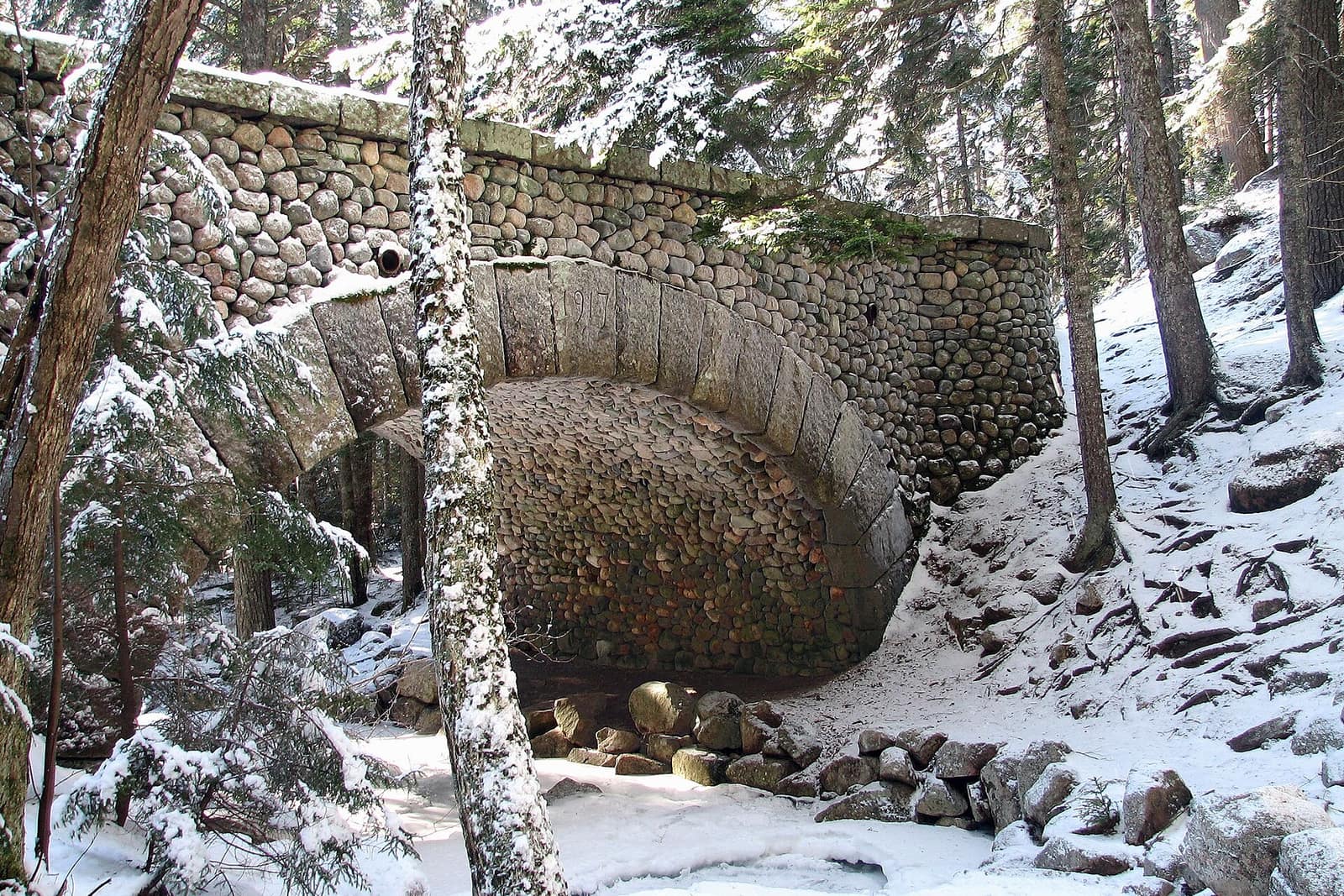
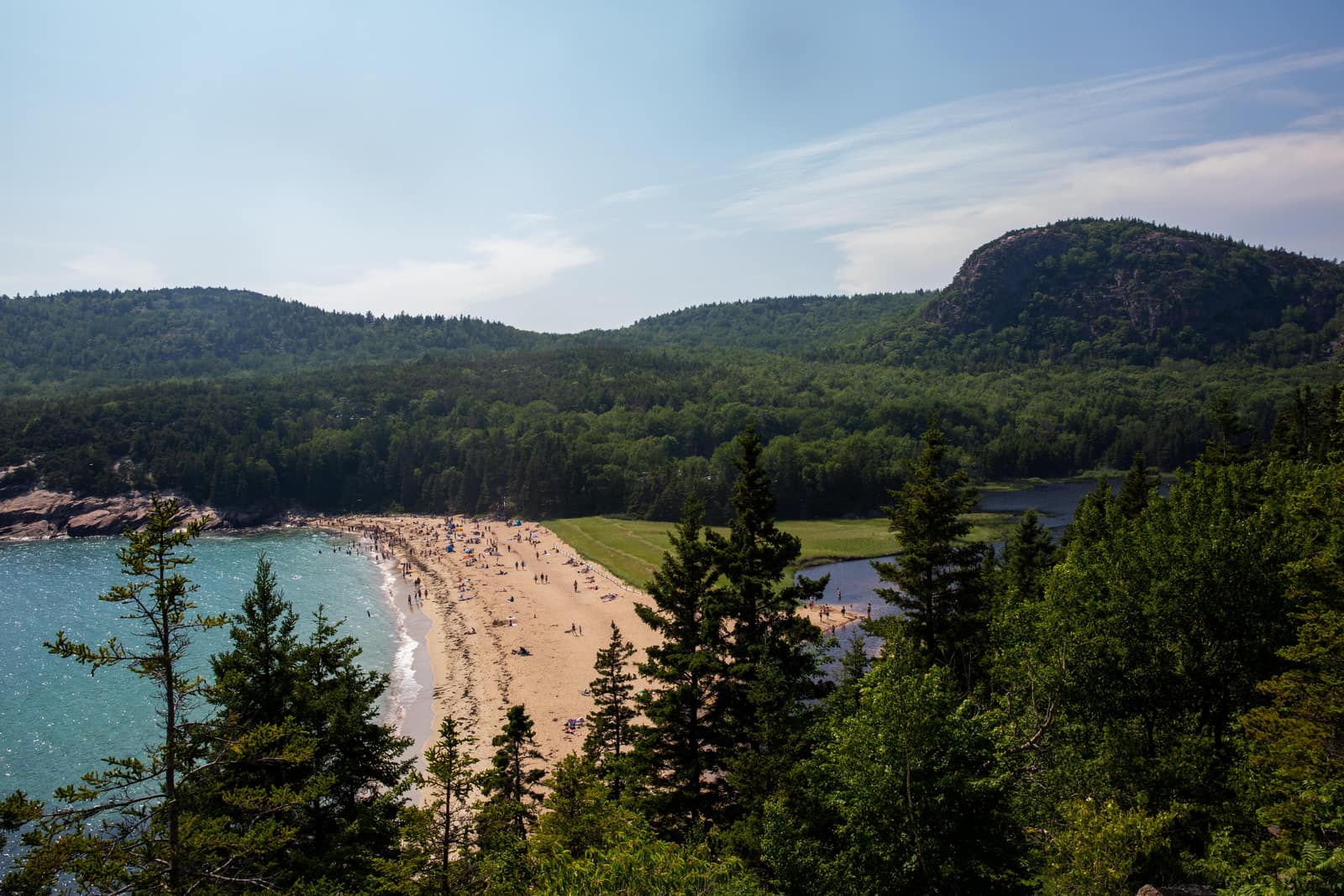
On Mount Desert Island, the 45 miles of broken-stone carriage roads are the best foliage route in Acadia. Built by John D. Rockefeller Jr. in the early 1900s specifically to keep motor vehicles out, the carriage roads wind through birch and maple stands above Eagle Lake and Jordan Pond and are closed to cars, so you have the color without traffic. Cadillac Summit Road requires a timed vehicle reservation through recreation.gov; October reservation slots fill within minutes of the 90-day release window, so book ahead as soon as your dates firm up. The Park Loop Road from Bar Harbor past Sand Beach and around to Jordan Pond works well by car too, with the color on both sides of the road through most of the 27-mile circuit.
On the MidCoast, Camden is the most photographed fall harbor in Maine, and with reason. From the summit of Mount Battie, at 800 feet above the bay, hardwood ridges spill down on three sides toward the Camden waterfront and the water. You can drive the auto road or hike the 1-mile summit trail from the parking area off Route 52. Just east of Camden, the Megunticook Ridge trail through Camden Hills State Park runs the high line and looks west toward the Highlands and east toward Penobscot Bay at the same time.
What Controls the Intensity of the Color
The red in sugar maples comes from anthocyanins that form as trees begin drawing down their chlorophyll in the shortening days of fall. Intensity depends on temperature, specifically cool nights and sunny days that keep leaf sugars producing as the green pigment breaks down. A drought summer tends to produce paler color. A warm, wet September can push peak dates back by a week or more. What stays constant is the day-length trigger, which is why the calendar timing is reliable even when the color intensity varies year to year.
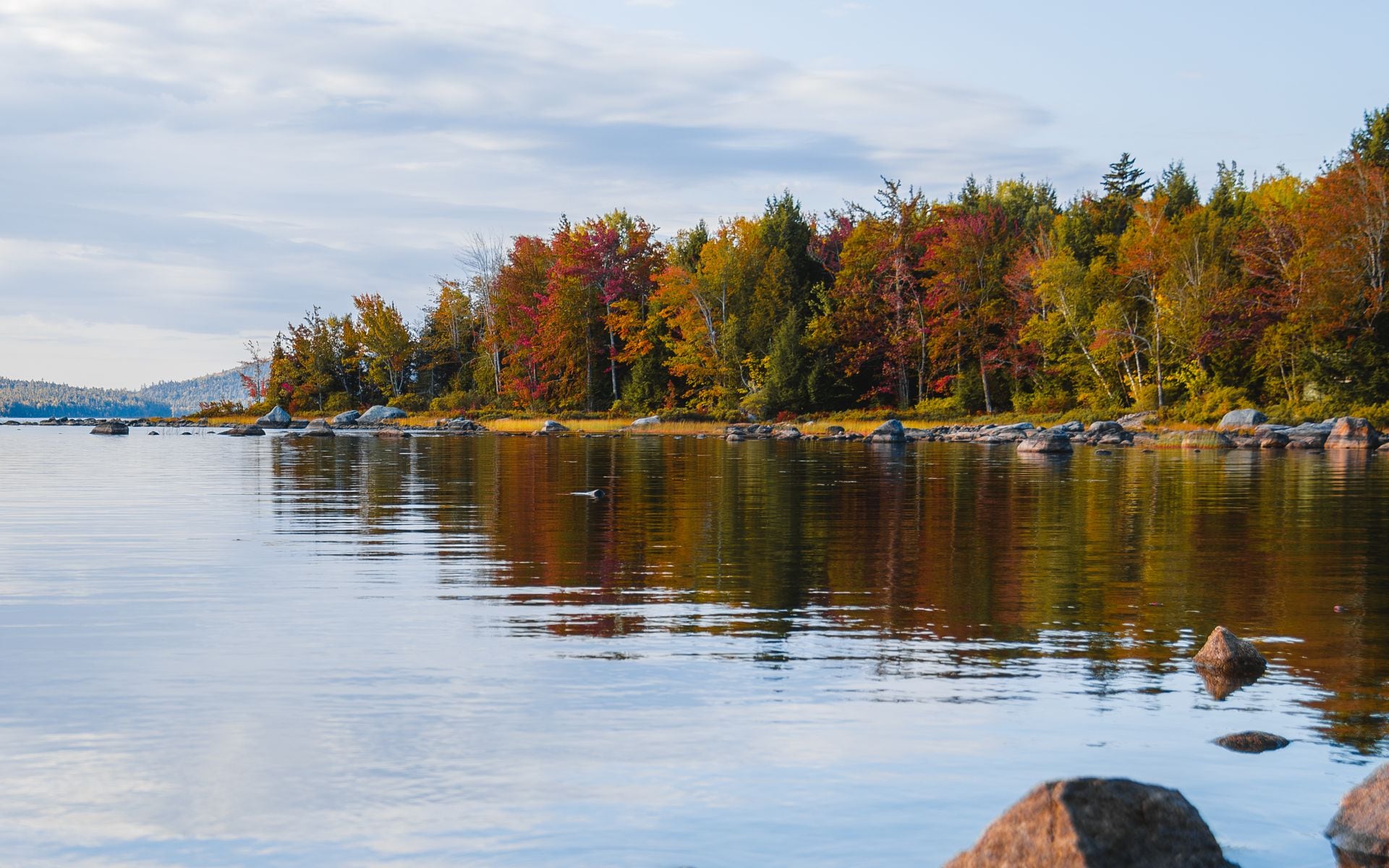
Maine’s species mix is part of what makes the foliage as strong as it gets in the Northeast. The interior and highlands carry dense stands of sugar maple, red maple, and yellow birch, which give the full range from deep crimson to clear yellow. American beech turns a papery bronze that holds on the branches long after other leaves have fallen. The contrast between that bronze and the dark-green spruce-fir zones, which stay evergreen through October, is the signature look of Maine fall that you see on almost every foliage photo from the region. The coast and southern areas have more oak and beech, which tend toward orange and maroon rather than the reds you get at higher elevations inland.
Booking Ahead and What to Expect on the Ground
Columbus Day weekend is the single busiest foliage weekend on the Maine coast. Camden and Bar Harbor lodging books out months ahead for that window, and popular inns in Kennebunkport can fill just as fast. If you want those dates, start looking at lodging in early summer. The timing guide for Maine visitors covers shoulder-season options in detail, but the short version is this: the last week of September into the first few days of October for the highlands, and the third week of October for the coast, are considerably easier to book and can match or beat the peak window depending on the year.
Expect to pay roughly $150 to $350 per night (estimate) at a coastal inn in October, with Bar Harbor at the higher end and the MidCoast towns in the middle. The Rangeley Lakes and Moosehead areas run $90 to $200 per night (estimate) at a motel or small inn and tend to have more last-minute availability. Midweek travel (Tuesday through Thursday) cuts crowds significantly on Route 1 through Camden and on the approaches to Bar Harbor. The color on a Wednesday is identical to the color on a Saturday; the only difference is parking.
Fall is also when the Maine coast relaxes. The lobster is still coming off the boats in October, and the July crowds are gone, which is when eating lobster in Maine gets more straightforward. Many coastal towns that were shoulder-to-shoulder in August have actual parking available. This Maine Travel Guide covers the logistics of getting into each region, which matters because the driving times between the western mountains and the coast are longer than they look on a map. Portland to Rangeley is about 2.5 hours; Portland to Moosehead Lake (Greenville) is closer to 3 hours.
If you’re still deciding whether Portland or Bar Harbor is the better base for your trip, read the Portland vs. Bar Harbor comparison before you book. Portland has convenience and the best restaurant options, but it sits below the main foliage zone. Bar Harbor and the Acadia hills are the stronger foliage destination if the color is the point, with the trade-off that lodging books faster and the drive from Portland International Jetport (PWM) is about three hours each way.
Frequently asked questions
When exactly does Maine fall foliage peak?
Aroostook County and the Moosehead Lake area typically peak in the last week of September. The western mountains around Rangeley and Bethel peak in the first two weeks of October. Acadia and the MidCoast coast, including Camden and Bar Harbor, usually peak between October 10 and 18. The coast south of Portland can hold color into the third and fourth weeks of October. Columbus Day weekend, the second full weekend in October, tends to land in the middle of the coastal peak, which is why it is the hardest window to book.
Is Acadia National Park good for fall foliage?
Yes, and it is one of the stronger foliage destinations on the East Coast for the combination of ocean views, granite headlands, and hardwood color. The carriage roads and Cadillac Mountain at 1,532 feet are the two best venues in the park for foliage. Cadillac Summit Road requires a timed vehicle reservation through recreation.gov from late May through late October, and October dates sell out fast, so book as soon as your dates are set. The park is significantly less crowded in October than in July and August, even though Columbus Day weekend is still busy. The Jordan Pond House, known for its lawn view of the Bubbles peaks and its popovers, typically stays open through Columbus Day.
How far in advance should I book for a Maine fall foliage trip?
For popular coastal spots like Camden and Bar Harbor during Columbus Day weekend, 3 to 6 months ahead is the reliable range. Small inns in those towns can be fully booked by July for mid-October dates. The Rangeley Lakes and Moosehead Lake areas have more availability and can sometimes be booked 4 to 6 weeks out. If you wait too long for a coastal spot during peak, you may end up driving in from Bangor or Augusta, which adds 45 minutes to 2 hours of driving each day.
What is the best fall foliage drive in Maine?
Route 17 between Rumford and Oquossoc in the Rangeley Lakes area is the best single-road foliage drive in Maine, with the Height of Land viewpoint above Mooselookmeguntic Lake as the centerpiece. The Park Loop Road in Acadia is the top coastal option, running 27 miles from Bar Harbor past Sand Beach and around to Jordan Pond. On the MidCoast, the auto road to the Mount Battie summit in Camden gives you the harbor-and-hills view. For a longer loop, the Portland to Bethel to Rangeley to Kingfield circuit covers about 250 miles and takes you through the best of the western mountain color.