Maine has more than 60 standing lighthouses spread across a coastline that runs from the New Hampshire border north to Lubec, the easternmost point in the country. Here are the ones worth building a day, or a full road trip, around.
Why Maine Lighthouses Reward a Real Detour
The number alone is striking: roughly 65 lighthouses still standing along a coastline that measures around 3,500 miles once you trace every cove, inlet, and island shore. Maine built so many because the coast demanded it. The same granite ledges and shifting fog banks that sank ships in the 1800s are what make these structures so visually compelling today. The full guide to the best lighthouses in Maine covers the top picks in depth. This post is the practical companion: what to expect at each stop, how they fit together on a route, and when to go.
Most of Maine’s active lighthouses are US Coast Guard property, so you’re visiting the grounds and the view rather than the tower itself. The exceptions are a handful with keeper’s house museums or organized programs. A few of the best lights are boat-access only, which turns the trip into a half-day excursion rather than a roadside pull-off. Factor that in when you’re planning time.
Portland Head Light: The One Everyone Goes to First
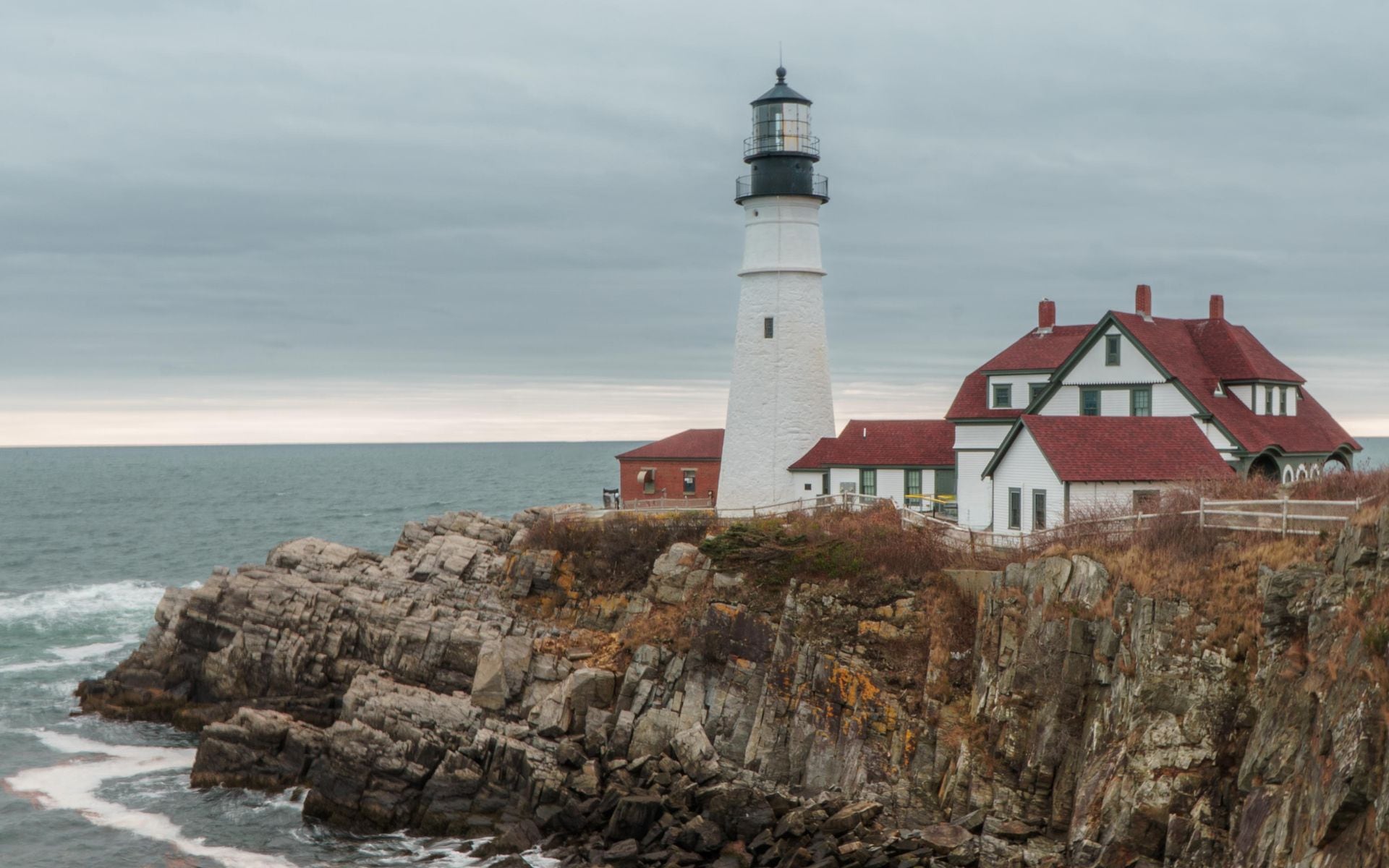
Portland Head Light in Fort Williams Park, Cape Elizabeth, is the oldest lighthouse in Maine, first lit in 1791 after being commissioned by George Washington. It’s free to visit year-round, about 15 minutes south of downtown Portland by car, and roughly 10 minutes from Portland International Jetport (PWM). The keeper’s house is now the Museum at Portland Head Light, open seasonally from late May through mid-November, with adult admission typically in the $3 to $5 range.
The park itself is worth more than a quick photo stop. An ocean trail follows the headland from the lighthouse parking area and drops to a rocky beach below the tower. In summer, the lot fills by 9 a.m. on weekends; arriving before that gives you the grounds to yourself for a stretch. Afternoon light hits the west face of the lighthouse well, which is when most serious photographers show up. In the off-season, November through April, the park stays open but the museum closes and the crowds are almost nonexistent.
Cape Neddick Nubble Light: Best Shot from the Mainland
The Nubble Light in York sits on a small island a few dozen yards offshore from Sohier Park on Cape Neddick Road. You cannot set foot on the island, but the viewing area gives one of the cleanest lighthouse compositions in New England: red keeper’s house, white tower, open ocean on three sides. Parking is free, the park has restrooms, and the whole stop takes 20 to 30 minutes if you’re on a tight schedule.
York is about 50 minutes south of Portland on I-95, just north of the New Hampshire border. The Nubble sits squarely in the southern beaches corridor, so it pairs naturally with a stop at York Beach, Ogunquit, or Wells on the same day. Late November through January, the town illuminates the lighthouse with holiday lights and evening visitors show up on weekdays when parking is easier. For timing your Maine trip, the Nubble is one of the few lighthouses that has something to offer in every season.
Pemaquid Point Light: The Best Rock Formations on the Coast
Pemaquid Point Light, near Bristol on the tip of the Pemaquid Peninsula, stands above a stretch of folded and wave-carved granite ledge that photographers spend hours working. The rock formations here are unlike anything else at a Maine lighthouse: the layered granite has been cracked, tilted, and smoothed into channels and pools that change completely between high and low tide. The Fishermen’s Museum operates in the keeper’s house, with a small admission fee for the grounds of roughly $3 to $5 per adult in recent seasons.
Getting to Pemaquid means taking Route 130 south from Damariscotta, about 90 minutes from Portland and two hours from Bangor International (BGR). The drive down the peninsula is part of the experience: small lobster harbors, salt ponds, and working boat docks at every bend. This section of the MidCoast, centered on Damariscotta and the surrounding peninsulas, is among the most rewarding stretches to visit in fall, when the boat docks are still active and leaf color runs through the hills behind the coves. Plan 45 minutes minimum on the rocks at low tide.
Rockland Breakwater Light: The One You Have to Walk To
The Rockland Breakwater Light sits at the end of a 7/8-mile granite breakwater jutting into Rockland Harbor, and walking it is the point. The breakwater starts at the end of Samoset Road near Jameson Point, access is free, and the walk out puts Penobscot Bay on both sides of you with the Camden Hills rising to the north. The granite blocks are uneven and get slippery when wet, so real shoes matter here. The Friends of Rockland Harbor Lights open the lighthouse on summer weekends from late June through Labor Day.
Rockland is about two hours from Portland via I-295 and US-1. From the far end of the breakwater on a clear day, you can see Owls Head Light across the harbor and the outlines of Vinalhaven and North Haven on the horizon. The town itself anchors the midcoast art scene, with the Farnsworth Art Museum on Main Street and the Center for Maine Contemporary Art a few blocks away. This is a useful overnight base if you’re stringing together Pemaquid, the Rockland Breakwater, and Marshall Point on a MidCoast lighthouse circuit.
Marshall Point Light: Port Clyde’s Quiet Gem
Marshall Point Light stands at the tip of the St. George Peninsula in Port Clyde, connected to the shore by a short wooden walkway above the rocks. The keeper’s house is maintained by the St. George Historical Society as a free museum in summer, with keeper logs and artifacts from the 1800s on display. The lighthouse appeared briefly in the 1994 film Forrest Gump, which the museum notes without overstating.
Port Clyde is about 2.5 hours from Portland via Route 1 and Route 131 south from Thomaston. It’s also the departure point for the seasonal Monhegan Island ferry, so if that’s in your plans, Marshall Point fits naturally before or after the boat. The village of Tenants Harbor, on Route 131 between Thomaston and Port Clyde, is a working lobster harbor that sees few tourists and looks much as it has for decades.
Bass Harbor Head Light: Acadia’s Lighthouse
Bass Harbor Head Light sits on a granite cliff on the southwest corner of Mount Desert Island, inside Acadia National Park. Entry requires a park pass, currently $35 per vehicle for a 7-day Acadia pass. The lighthouse is active and not open to visitors, but stone steps from the viewing area lead down to the rocks below, and the classic photograph of this lighthouse is taken from those lower rocks. Check tide charts before you go: at high tide the approach is slippery and restricted.
Bass Harbor is about 20 minutes from Bar Harbor by car, on the quieter southwest side of MDI. Combining a lighthouse stop with time on this side of the island, through Southwest Harbor and Bernard, gives you a very different experience from the more crowded Bar Harbor side. If you’re navigating Acadia without a personal vehicle, our post on visiting Acadia without a car covers the Island Explorer shuttle routes, though Bass Harbor is one of the stops that sees less frequent service, so plan accordingly.
West Quoddy Head Light: End of the Road, Worth Every Mile
West Quoddy Head Light in Lubec is the easternmost lighthouse in the United States. It’s also one of the few lighthouses in the country with a candy-stripe paint pattern: alternating horizontal bands of red and white. The tower sits within West Quoddy Head State Park, which charges a day-use fee of roughly $6 to $8 per adult for out-of-state visitors. The park has a visitors center, trails along the granite headland, and views toward Grand Manan Island, New Brunswick, a few miles across the water.
Lubec is remote: about 4.5 to 5 hours northeast of Portland via US-1 and Route 189, or roughly 2.5 hours from Bangor. West Quoddy Head is the first point in the contiguous US to receive morning sun, and in June and July the light catching the tower at sunrise is unlike anything else on the Maine coast. Fog runs heavy in June, so early July through September gives you better odds of clear conditions. The town of Lubec is worth a look on its own: a working waterfront, excellent smoked herring from the Lubec Smoker on Water Street, and the Roosevelt Campobello International Park just across the bridge into New Brunswick.
How to Route a Maine Lighthouse Trip
For a single day out of Portland, Portland Head Light and the Nubble Light in York are the most efficient pairing: both are free to view, easy to reach within an hour of the city, and offer very different coastal scenes. Spend the morning at Fort Williams Park, grab lunch in Ogunquit or the Yorks, and hit Sohier Park in the afternoon.
For a two-day MidCoast circuit, Pemaquid Point, the Rockland Breakwater, and Marshall Point form a natural loop along Route 1 and its peninsulas. Base yourself in Rockland or Damariscotta the first night. For Acadia visitors, Bass Harbor Head Light is the clear add-on: it’s 20 minutes from Bar Harbor, takes 45 minutes round-trip, and adds one of the best lighthouse compositions on the coast with minimal extra effort. The full Maine coast lighthouse route from York to Lubec covers roughly 300 miles and takes three to five days depending on how many boat-access lights you add. The Maine Travel Guide has regional breakdowns to help you plan the full loop.
Frequently asked questions
Which Maine lighthouse is easiest to visit from Portland?
Portland Head Light in Cape Elizabeth is the obvious first choice: 15 minutes from downtown Portland, free to enter year-round, and set in Fort Williams Park with a good oceanside trail. The Nubble Light in York is about 50 minutes south on I-95, and the Cape Elizabeth Two Lights are also within 20 minutes of the city. If you only have an afternoon and a car, Portland Head Light plus a walk along the headland is the complete experience.
Can you go inside any Maine lighthouses?
Most active Maine lighthouses are US Coast Guard property and the tower interiors are closed to visitors. The keeper’s house museums at Portland Head Light (admission roughly $3 to $5, open late May through mid-November) and Pemaquid Point Light (similar seasonal admission) let you explore lighthouse history without entering the tower. Burnt Island Light in Boothbay Harbor offers the most hands-on access through the Maine Department of Marine Resources living history program, which runs late June through August and requires a boat tour to the island, typically $30 to $45 per adult.
What is the best time of year to visit Maine lighthouses?
Late June through September covers the widest window: boat tours to island lighthouses run through early September, keeper’s house museums are open, and daylight stretches past 8 p.m. in midsummer. Fall, from late September through mid-October, is excellent for the drive-to lighthouses: parking situations ease considerably from the peak July and August crowds, and the lower sun angle produces good light for photography. West Quoddy Head in Lubec and the Downeast lighthouses get heavy fog in June, so July through September gives you better odds of clear views. For full seasonal context, the guide to the best time to visit Maine covers the coast month by month.
How long does a Maine lighthouse road trip take?
That depends on how far Downeast you go. A one-day trip from Portland covers Portland Head Light and the Nubble in York comfortably. A two-day loop adds the MidCoast lights: Pemaquid, Rockland Breakwater, and Marshall Point. Adding Acadia and Bass Harbor Head Light turns it into a long weekend, and driving all the way to West Quoddy Head Light in Lubec and back to Portland is a four to five day trip at a reasonable pace. Route 1 moves slowly in summer, especially through Wiscasset and the MidCoast towns, so build in more time than the GPS estimates.