Visiting Acadia National Park in winter is a real option, and not a consolation prize for people who missed the summer window. The park stays open year-round, and from December through March the crowds thin to the point where you can have the carriage roads entirely to yourself on a weekday. What changes is the infrastructure. The Island Explorer shuttle stops after Columbus Day. Cadillac Mountain Road closes when the weather turns and stays closed through April or later. Some trails turn icy enough to need microspikes. And most of Bar Harbor’s restaurants and shops shutter from November through April. Plan around those facts and you’ll find a quieter, less expensive, and genuinely different version of the park.
What Acadia Looks Like in Winter
The park gets real weather. Average high temperatures in December and January sit in the low-to-mid 30s Fahrenheit; lows can drop to single digits in a hard cold snap. The summit of Cadillac at 1,528 feet is colder and windier than the base by a meaningful margin. Snowfall comes irregularly on the coast. Some years the carriage roads hold good cross-country ski and snowshoe conditions from December through February; other years you get rain, ice, and mud. Check the forecast before you book. This is coastal Maine, and the weather doesn’t cooperate with firm plans.
What the coast delivers regardless of snow is the landscape without the crowds. Thunder Hole on the Park Loop Road, the pink granite at Otter Cliff, the view over Frenchman Bay from the lower Champlain Mountain trails: all of it is accessible and all of it looks different when you’re the only car at the pullout. In July, those viewpoints have a line forming by 9 a.m. In January, you might not see another person.
What’s Open and What’s Closed
The park itself never fully closes. The Park Loop Road stays open year-round as long as conditions allow, with the exception of Cadillac Summit Road. The Hulls Cove Visitor Center runs reduced winter hours, typically Thursday through Sunday from 9 a.m. to 4 p.m. Confirm current hours at the NPS Acadia website before you drive, because schedules shift.
Cadillac Mountain Road closes to vehicles in late October or early November and reopens in late April or May, depending on snowpack and road conditions. If driving to the summit for the view or the sunrise is your primary reason for coming, winter is the wrong season for that. The road is inaccessible from the car; you can hike to the summit via the South Ridge Trail if conditions allow.
The timed vehicle reservation required for Cadillac from late May through late October does not apply in winter because the road is closed. Standard park entry fees still apply. If you have a current America the Beautiful annual pass, keep it in the car.
The Island Explorer shuttle runs late June through Columbus Day only. In winter, you need a car. The visiting Acadia without a car guide explains what the shuttle covers in season, but in winter that option doesn’t exist. Plan accordingly.
Winter Hiking in Acadia National Park
More than 150 miles of trail are technically accessible in winter, though conditions vary widely by week and elevation. Here is what to expect from the more commonly attempted routes:
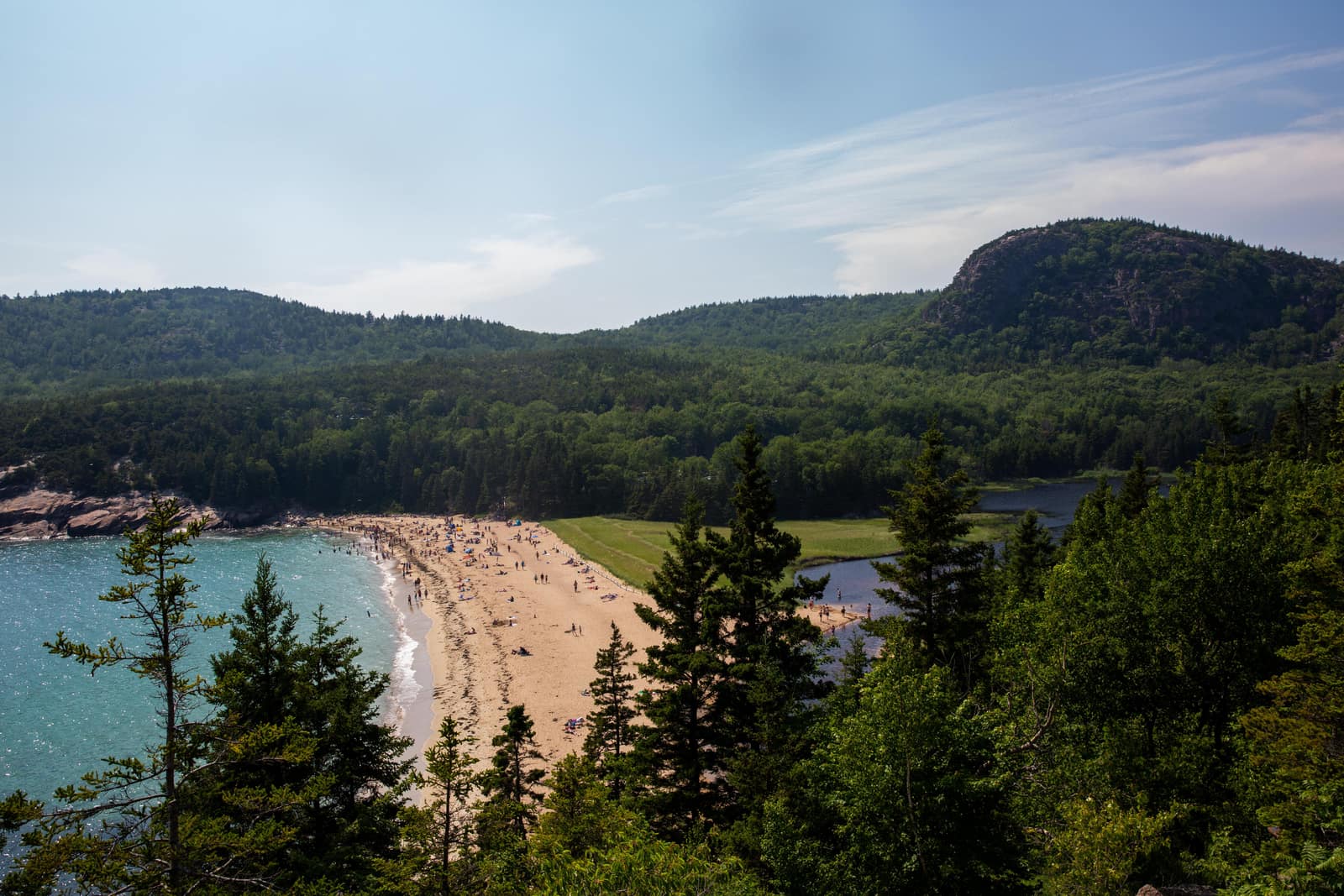
Ocean Path from Sand Beach to Otter Cliff is the flattest coastal walk in the park, about 4 miles round-trip along the Park Loop Road. It can ice over where spray hits the path, but it is the most accessible winter option for anyone without technical gear. Waterproof boots and trekking poles make the difference.
Acadia Mountain Trail (2.7 miles, moderate) on the quiet western side of the island runs to views over Somes Sound (the only true fjord on the East Coast of the United States) without the same ice exposure as the eastern summit trails. In a hard freeze you will still need microspikes, but it is a more forgiving winter hike than the eastern ridge options.
Beech Mountain (about 1.4-mile loop) is a short, doable winter objective with an open summit and views southwest toward Long Pond and the western mountains. The trailhead is off Beech Hill Road near the Beech Mountain parking area.
The Beehive Trail and Precipice Trail deserve separate mention. Both involve iron rungs and near-vertical sections; when iced over, they become technical climbing, not hiking. The seasonal falcon closures (spring and summer) lift in winter, so the trails are open in the sense that no closure sign is posted. On glazed ledges they require crampons, an ice axe, and experience to do safely. If you’ve never climbed an iced technical route, come back for these in May.
For current trail conditions, check the NPS site or stop at the visitor center. Conditions can shift from passable to dangerous overnight after a rain-freeze cycle.
Cross-Country Skiing and Snowshoeing the Carriage Roads
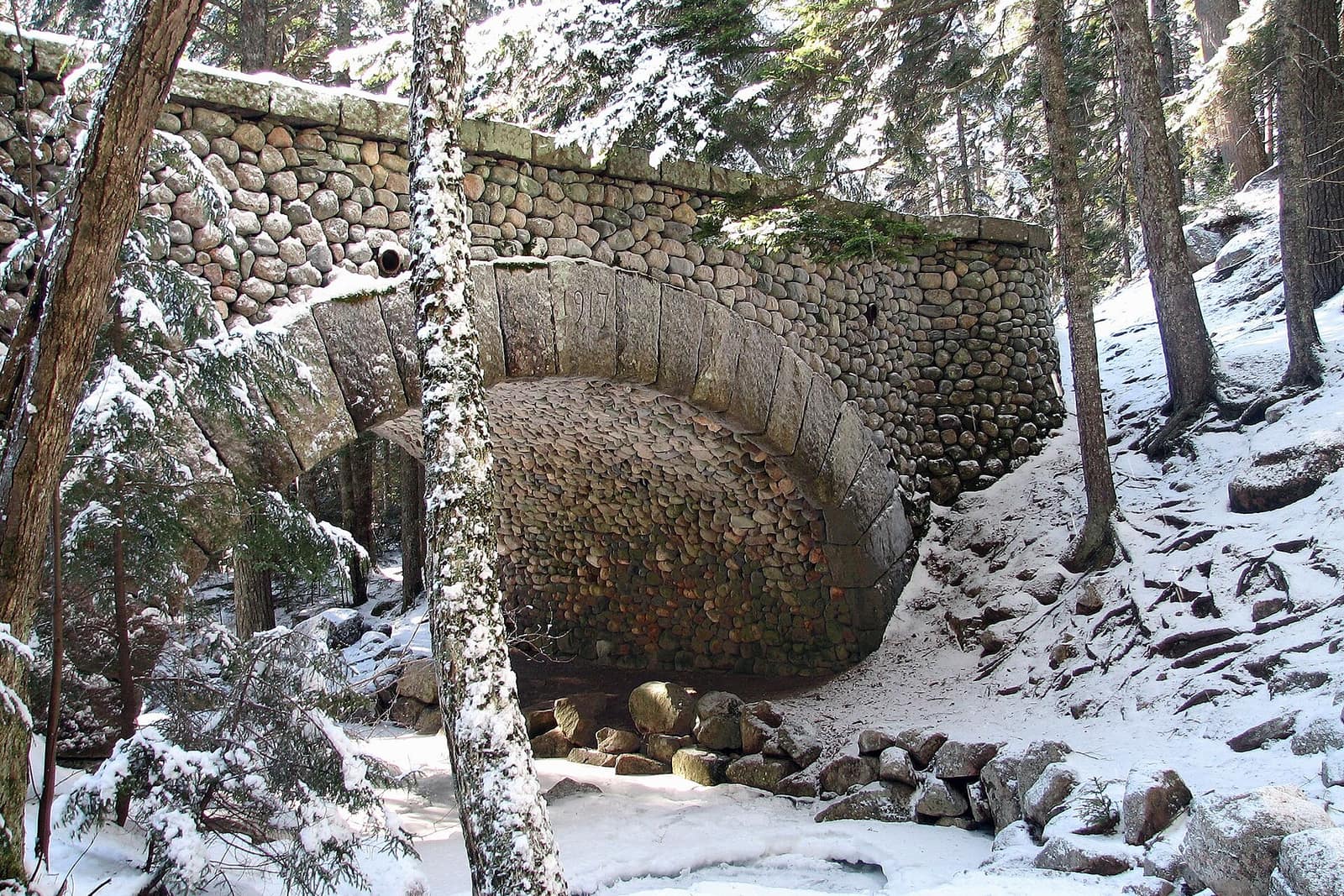
The 45 miles of carriage roads built by John D. Rockefeller Jr. are the main draw for winter visitors. When snow covers them, they offer one of the more accessible ungroomed cross-country networks in the Northeast. The park does no grooming. What you get depends entirely on snowfall, temperatures, and how much foot and ski traffic has packed the surface. After 8 or more inches of new snow the loops around Eagle Lake, Witch Hole Pond, and Jordan Pond are legitimate skiing. The carriage roads are wide, well-marked, and follow gentle grades, making them beginner-friendly in good conditions.
The Jordan Pond loop (about 3 miles, flat) is the most popular winter snowshoe route. Jordan Pond House closes for the season after fall, so there is no food or restroom access at the pond. Come self-sufficient. The views of the Bubbles reflected in the open water (or across the snow-covered ice) are worth the drive.
Ski and snowshoe rentals are available in Bar Harbor from a small number of year-round outfitters, but inventory thins in winter. Call ahead to confirm what’s in stock before you plan around it.
Bar Harbor and Mount Desert Island in the Off-Season
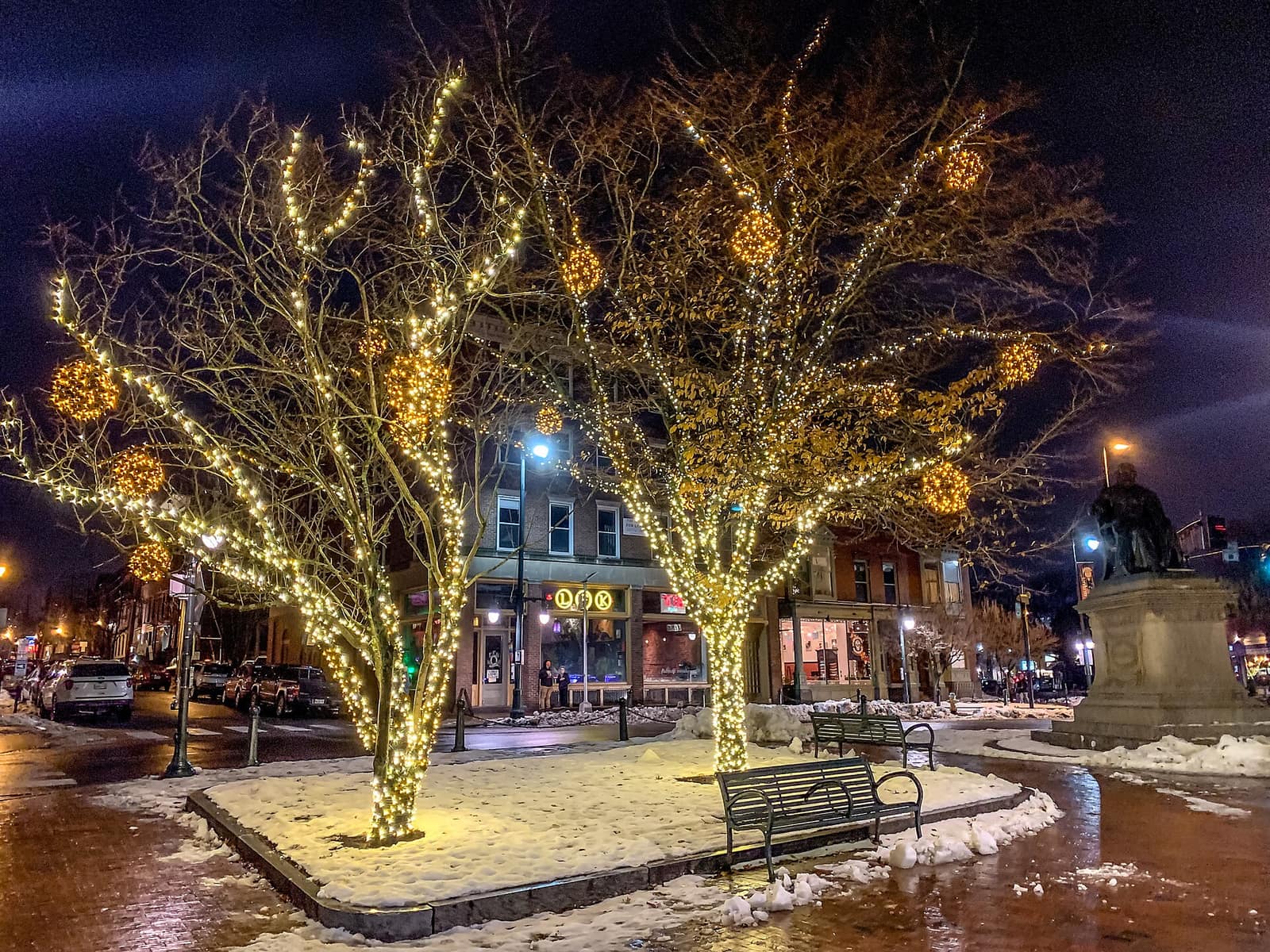
Bar Harbor runs a genuine off-season from November through April. Roughly a fifth to a quarter of the town’s restaurants and shops stay open year-round; the rest close. The ones that do stay open tend to be locally owned, less expensive than their summer counterparts, and unhurried. Café This Way on Mount Desert Street runs year-round breakfasts. Hannaford on Cottage Street is open year-round for groceries.
Southwest Harbor on the western side of the island has a slightly fuller year-round commercial scene and is closer to the Beech Mountain and Acadia Mountain trailheads. Ellsworth, 25 miles north of Bar Harbor on Route 3, has a standard commercial strip with grocery stores, a hardware store, and gas. Stock up there before you drive onto the island if you’re staying more than a day.
Mount Desert Island has about 5,000 year-round residents. You will be driving roads with locals running errands, not following a summer itinerary. The pace is slower, the lines nonexistent, and the experience of being on the island in winter feels closer to the real place than anything that happens in August.
Getting There in Winter
The drive to Acadia from Portland takes roughly 3 hours and 20 minutes. You can run I-95 north to Bangor and then Route 1A south toward Ellsworth and the island bridge, which is marginally faster than the scenic Route 1 corridor. In summer, Route 1 through Brunswick, Bath, Rockland, and Belfast is a slow-moving sightseeing crawl; in winter it moves at highway pace. If you have time and clear roads, it is a good winter drive through the Downeast and Acadia region.
Bangor International Airport (BGR) is the closest commercial airport, about 55 miles northwest of Bar Harbor on I-395 and Route 1A. Delta and American serve it with connections from the major hubs. Portland International (PWM) has more direct-flight options but adds roughly 90 minutes of driving. Many visitors fly Boston Logan and drive the 4 to 4.5 hours north, which works well if you pick a midweek arrival and avoid Interstate 95’s worst congestion south of Portsmouth.
Road conditions on the island in winter can be slick on secondary roads. The Park Loop Road is plowed when it’s open, but carriage road access points and some island side roads may be snow-packed or icy. All-wheel drive or snow tires are a genuine advantage, not a luxury.
Where to Stay Near Acadia in Winter
Options are limited but real. In Bar Harbor, a handful of hotels and inns run year-round, including the Bar Harbor Inn on Newport Drive and the Atlantic Oceanside. Vacation rentals and a few B&Bs also stay open on and off. Call ahead rather than relying solely on third-party booking sites, which sometimes show availability for properties that are actually closed for the season.
Southwest Harbor has two or three year-round properties and is about 15 miles from Bar Harbor. Ellsworth has chain motels at significantly lower rates than anything on the island. Rates across the board in winter are 40 to 60 percent lower than July peak.
If you want to watch the sunrise on Cadillac Mountain from the summit road pullout, that is not a winter option since the road closes. You can hike the South Ridge Trail to the summit in winter if you have the gear and the conditions allow, and the sunrise from the top on a clear winter morning is worth the effort. Plan for a 4 to 5 a.m. start from the trailhead to reach the summit by first light.
For lodging across all of Maine’s regions, the where to stay in Maine guide covers options by region and price range.
When to Go and What to Bring
The practical window for a winter Acadia trip is late December through February for the best odds of snow on the carriage roads, or late November and March if you want quiet trails without needing to time snowfall. January is statistically the coldest and snowiest month on the island. March can land anywhere from deep winter to a wet, muddy shoulder season depending on the year.
Pack: waterproof insulated boots rated to at least 0°F, microspikes, gaiters if you’re going off-trail, a wind layer for the ridge and coastal headlands, and more warm layers than you think you need. The ocean keeps coastal temperatures from getting as extreme as the interior, but wind chill on the exposed granite is real. Bring enough water and food to be self-sufficient. The options on the island in winter are fewer than they appear on a summer map.
The park’s year-round status is not a marketing claim. Acadia in winter is a specific trip with specific constraints, and if you come knowing what to expect, it pays off.